


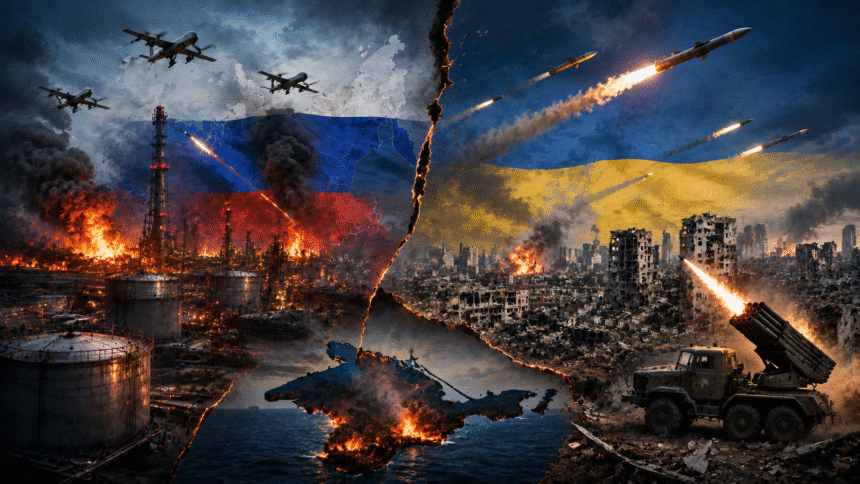
The conflict between Russia and Ukraine continues to escalate as both sides intensify aerial attacks and military operations, with new reports emerging of fires at oil facilities inside Russia and in the Crimean Peninsula following Ukrainian drone strikes.
According to European media reports and regional authorities, several energy and oil infrastructure sites were targeted during overnight attacks, leading to large fires and emergency responses in multiple locations. Videos circulating on social media showed flames and thick smoke rising from industrial facilities, although the full extent of the damage has not yet been independently confirmed.
The attacks are believed to be part of Ukraine’s ongoing strategy of targeting Russian energy infrastructure and military logistics facilities far from the frontline, aiming to disrupt fuel supplies and increase pressure on Moscow’s war operations.
At the same time, Russian forces continued launching missile and drone strikes on Ukrainian cities and infrastructure, with explosions reported in several regions across Ukraine. Ukrainian authorities said air defense systems intercepted part of the attacks, while emergency crews responded to damaged residential areas and critical facilities.
The exchange of long-range drone attacks has become an increasingly important aspect of the war during recent months, allowing both sides to strike targets deep inside enemy-controlled territory. Analysts say the growing use of drones is reshaping the battlefield and expanding the conflict beyond traditional frontlines.
Crimea remains one of the most sensitive areas in the conflict. Since Russia annexed the peninsula in 2014, Ukraine has repeatedly stated that recovering Crimea remains a strategic objective. Attacks on military and energy facilities in the peninsula have increased significantly over the past year.
Russian officials accused Ukraine of attempting to destabilize energy infrastructure and create panic inside Russian territory, while Ukrainian sources argue that such facilities are directly linked to Moscow’s military operations and logistical networks.
The latest escalation comes amid continued international concern over the possibility of a broader regional confrontation, especially as attacks increasingly target strategic infrastructure and critical energy installations.
European governments continue closely monitoring the situation due to concerns about energy markets, regional security, and the risk of further instability affecting neighboring countries. Oil prices and energy markets have shown sensitivity to developments involving Russian infrastructure and Black Sea security routes.
Despite ongoing diplomatic discussions about potential ceasefire initiatives and peace frameworks, military operations on both sides remain intense. Analysts warn that the conflict is entering a more dangerous phase characterized by deeper strikes, growing technological warfare, and increasing pressure on civilian infrastructure.
International organizations have also expressed concern about the humanitarian impact of continued attacks on cities and energy facilities, particularly as both Ukraine and Russia face growing economic and logistical challenges from the prolonged war.
The coming weeks are expected to remain highly volatile as both Moscow and Kyiv continue military operations while diplomatic efforts struggle to produce meaningful progress toward de-escalation.