

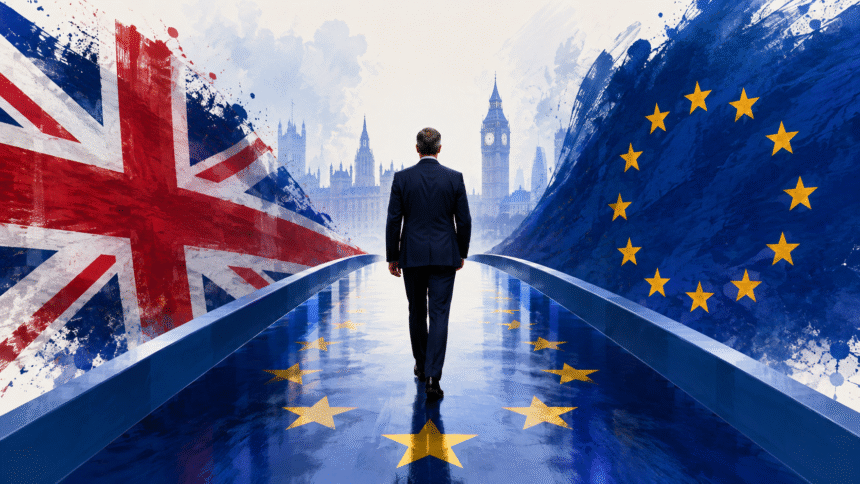
British Prime Minister Keir Starmer has promised to place Britain “at the heart of Europe” as he seeks to rebuild relations with the European Union and regain political momentum at home.
The pledge comes at a difficult moment for Starmer and the Labour Party, following disappointing local election results and growing pressure from within his own party. Some Labour figures have called for a change in direction, while others have questioned whether Starmer can restore public confidence after recent political setbacks.
In a speech in London, Starmer argued that Britain’s future prosperity, security, and influence depend on a stronger relationship with Europe. He said the previous Conservative government had been defined by breaking ties with the EU, while his Labour government would be defined by rebuilding them. According to reports, Starmer said he would set a “new direction for Britain” at the next EU summit, focusing on closer cooperation in trade, defence, and the economy.
However, Starmer stopped short of calling for Britain to rejoin the European Union, the single market, or the customs union. His position appears aimed at striking a careful balance: repairing the damage caused by years of post-Brexit tension without reopening the full debate over EU membership.
The move also comes as Labour faces pressure from rival parties. The Liberal Democrats have urged Labour to go further by supporting a return to the EU customs union and single market, while Reform UK continues to attack any closer relationship with Brussels as a betrayal of Brexit.
For Starmer, the European reset is also a domestic political strategy. By promising closer ties with the EU, he is trying to present Labour as a party capable of delivering economic growth, improving trade, and restoring Britain’s international standing. At the same time, he is attempting to calm internal unrest after Labour’s local election losses and criticism over his leadership.
The challenge will be whether this message is enough to satisfy both pro-European voters and Brexit-supporting communities. Many businesses want fewer barriers with Europe, but any major move toward Brussels could trigger political backlash from opponents who claim Labour is reversing Brexit by stealth.
Starmer’s pledge signals that Britain’s relationship with Europe is returning to the centre of national politics. The coming EU summit will likely show how far his government is willing to go — and whether closer European ties can help him survive one of the toughest political moments of his premiership.