

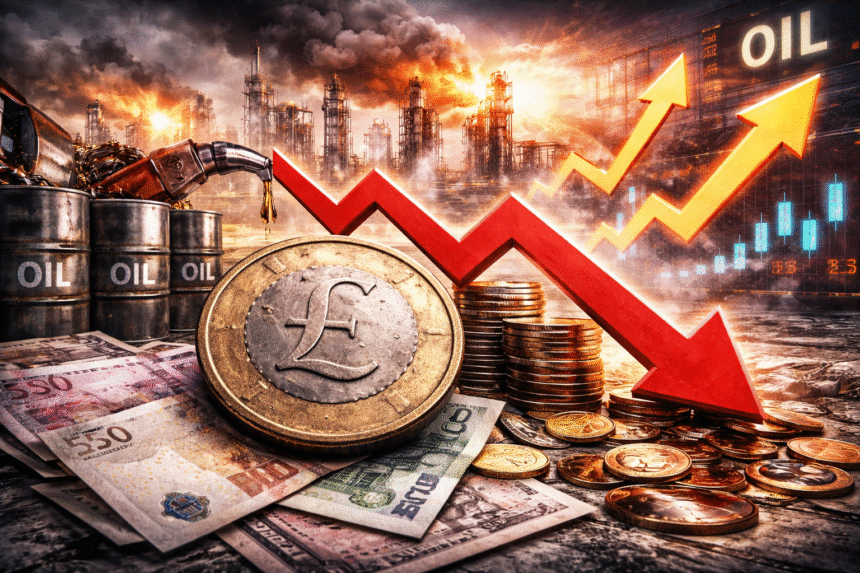
European currencies, including the British pound, have come under renewed pressure as surging oil prices intensify economic concerns across the continent. The decline reflects a broader market reaction to rising energy costs, which are increasingly seen as a threat to growth and financial stability in Europe.
Energy Shock Hits Currency Markets
The recent spike in global oil prices—driven by geopolitical tensions and supply disruptions—has had an immediate impact on currency markets. As energy costs climb, European economies face higher import bills, weakening their trade balances and putting downward pressure on their currencies.
The British pound has been particularly affected, slipping against major currencies as investors reassess the UK’s economic outlook in light of rising inflation and slowing growth prospects.
Inflation Fears Intensify
Higher oil prices are feeding directly into inflation across Europe. Increased costs for fuel and transportation are pushing up prices for goods and services, adding strain on both households and businesses.
For central banks, this creates a difficult situation:
- Tightening monetary policy could curb inflation but risk slowing growth
- Maintaining looser policy could support growth but allow inflation to rise further
This uncertainty has contributed to weaker investor confidence in European currencies.
Impact on the British Economy
In the UK, the pressure is particularly acute. As a net energy importer, the country is highly sensitive to fluctuations in global oil prices. The result has been:
- Rising energy bills for consumers
- Increased costs for businesses
- Concerns about reduced economic activity
These factors have combined to weaken the pound, which is increasingly vulnerable to external shocks.
Broader European Currency Weakness
The decline is not limited to the British pound. Other European currencies, including the euro, have also faced downward pressure as markets react to the same underlying challenges:
- Higher energy import costs
- Slower economic growth expectations
- Increased geopolitical uncertainty
Investors have responded by shifting toward traditionally stronger or safer currencies, further amplifying the decline.
Market Outlook
Looking ahead, the trajectory of European currencies will depend heavily on developments in global energy markets. A stabilization in oil prices could ease some of the pressure, while continued volatility may deepen the decline.
Central bank decisions, particularly from the Bank of England and the European Central Bank, will also play a critical role in shaping market sentiment in the coming weeks.
Conclusion
The fall in European currencies highlights the far-reaching impact of rising oil prices on the global economy. As energy costs continue to climb, Europe faces a challenging environment where inflation, growth, and currency stability are increasingly intertwined.
For now, the pressure remains firmly in place—leaving currencies like the British pound exposed to further fluctuations in an already volatile market.