

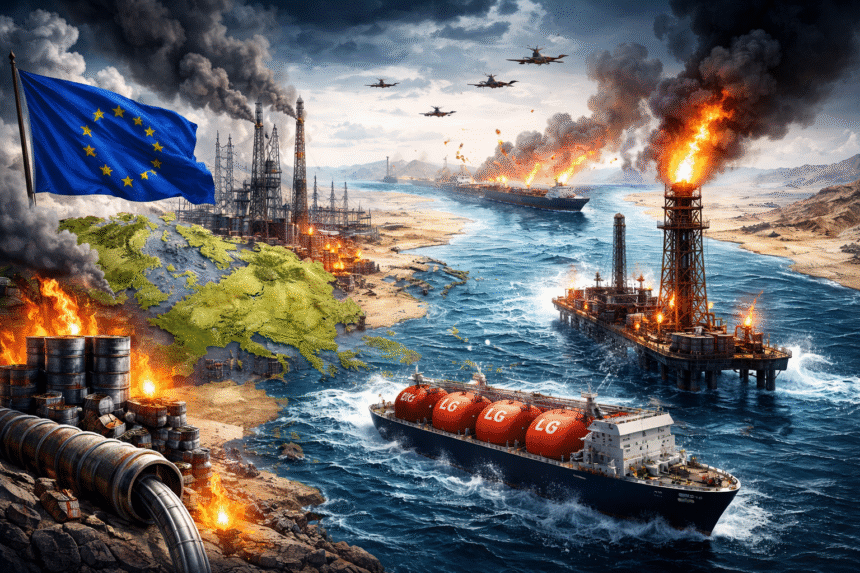
Europe is once again on the brink of a major energy crisis, as escalating tensions involving Iran and the disruption of the Strait of Hormuz send shockwaves through global markets. The situation highlights the continent’s continued vulnerability to geopolitical instability, despite efforts in recent years to diversify energy sources.
A Critical Chokepoint Under Pressure
The Strait of Hormuz is one of the most strategic waterways in the world, responsible for transporting roughly 20% of global oil and liquefied natural gas (LNG).
Recent military escalations and retaliatory actions in the region have led to severe disruptions, with shipping traffic sharply reduced and supply routes increasingly uncertain.
As a result, global energy markets have reacted immediately. Oil prices have surged, while European gas prices have jumped significantly—by as much as 70% in recent weeks, according to estimates.
Rising Prices and Supply Fears
Although Europe imports less direct energy from the Gulf compared to Asia, it remains highly exposed to global price fluctuations. Even partial disruptions in Hormuz have triggered:
- Sharp increases in oil and gas prices
- Rising electricity costs across EU countries
- Growing concerns over diesel and aviation fuel shortages
Recent data shows oil prices climbing above $100 per barrel, with global supply losses reaching millions of barrels per day.
Economic Impact on Europe
The energy shock is already feeding into broader economic pressure:
- Higher inflation driven by fuel and transport costs
- Increased burden on households and industries
- Risks of slowed economic growth or even recession
Europe is also facing an additional €13 billion in fossil fuel import costs due to the crisis.
Moreover, fertilizer prices and agricultural production costs are rising due to disrupted supply chains linked to energy markets—further amplifying inflation across food sectors.
Emergency Measures Under Consideration
In response, European policymakers are preparing contingency plans similar to those used during the 2022 energy crisis. These may include:
- Price caps on gas and electricity
- Taxes on excess energy company profits
- Delaying non-essential refinery maintenance to maintain supply
Officials have warned that prolonged disruption could force governments to reintroduce emergency interventions across energy markets.
Strategic Dilemma: Security vs. Sustainability
The crisis is also forcing Europe to reconsider its long-term energy strategy. Some countries are already debating:
- Slowing down climate targets
- Increasing reliance on fossil fuels in the short term
- Expanding domestic energy production
This reflects a broader tension between energy security and green transition goals, as policymakers attempt to balance immediate needs with long-term commitments.
The Bigger Picture
Experts warn that the current disruption could evolve into one of the largest energy shocks since the 1970s, with global consequences.
While Asia may face the most immediate shortages, Europe is expected to experience prolonged economic pressure, especially if the Strait of Hormuz remains unstable.
Conclusion
Europe’s energy situation has become increasingly complex, shaped by geopolitical tensions far beyond its borders. The disruption of the Strait of Hormuz underscores a critical reality: in an interconnected energy market, even distant conflicts can quickly translate into domestic crises.
As uncertainty continues, Europe faces a difficult road ahead—balancing supply security, economic stability, and long-term energy transformation in an increasingly volatile world.