


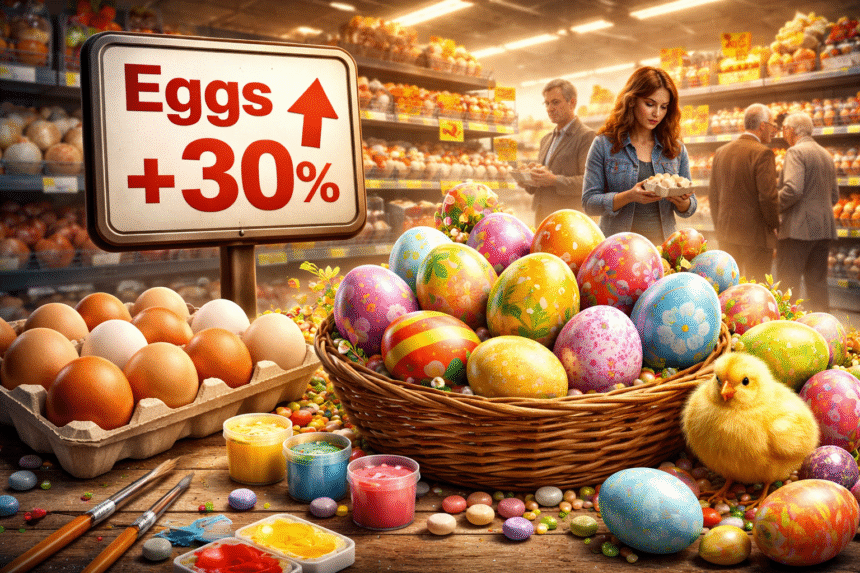
A sharp increase in egg prices—rising by as much as 30% in some European markets—is casting a shadow over Easter celebrations, highlighting the continued impact of inflation on everyday life across the continent.
Eggs, a central symbol of Easter traditions, are now becoming significantly more expensive for households already grappling with higher living costs. From decorating eggs to preparing traditional празднич meals and baked goods, families are feeling the financial strain during what is typically a festive and culturally significant period.
Economists point to a combination of factors this surge. Rising feed costs, higher energy prices, and supply chain disruptions have all contributed to increased production expenses for farmers. In addition, lingering effects from previous agricultural challenges—such as disease outbreaks in poultry farms—have tightened supply in several regions.
Retailers across Europe are reflecting these pressures, with noticeable price increases in supermarkets and local markets. In some countries, consumers have reported scaling back purchases or seeking cheaper alternatives, signaling a shift in spending behavior amid ongoing economic uncertainty.
The spike in egg prices is also being viewed as a broader indicator of persistent inflationary pressures. Despite efforts by central banks to control inflation, essential goods continue to experience price volatility, affecting consumer confidence and household budgets.
For governments, the situation presents a delicate challenge. While some countries are considering support measures for agricultural producers and consumers, fiscal constraints limit the scope of intervention. At the same time, policymakers remain cautious about introducing measures that could further distort markets.
Analysts warn that if input costs remain high and supply issues persist, elevated food prices could continue beyond the Easter season. This raises concerns about long-term affordability and the resilience of Europe’s food systems.
As families adjust their traditions in response to rising costs, the humble egg has become an unexpected symbol of a larger economic reality—one where inflation continues to shape daily life and test the financial resilience of households across Europe.