


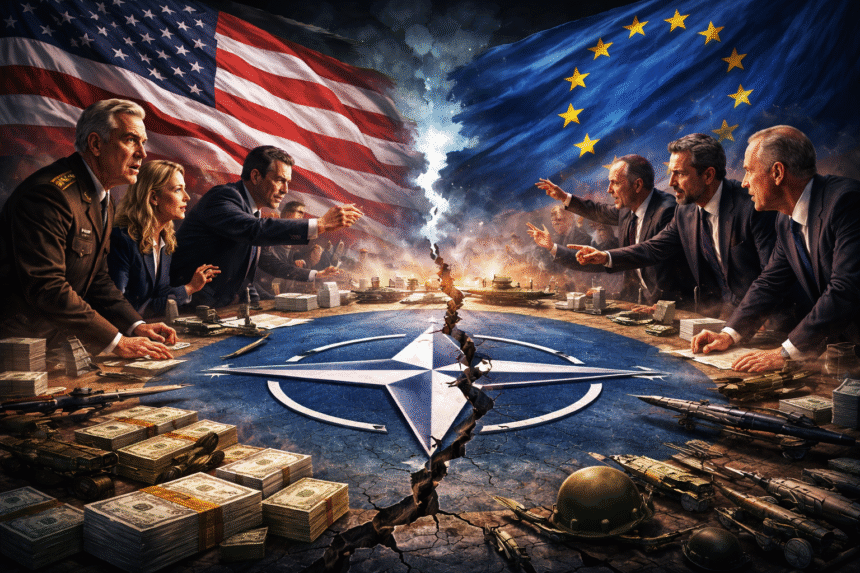
American proposals to reshape NATO’s structure around defense spending commitments are raising concerns across Europe, with analysts warning the move could trigger significant political and strategic disagreements within the alliance.
The proposals, which emphasize increased financial contributions and stricter burden-sharing requirements among member states, reflect longstanding US frustration over what it sees as unequal defense spending. Washington has repeatedly called on European allies to meet or exceed NATO’s target of allocating 2% of GDP to defense, arguing that the current imbalance places an unfair burden on the United States.
However, the latest push goes beyond previous demands, suggesting a potential restructuring of NATO’s priorities, funding mechanisms, and even decision-making influence based on financial contributions. This shift has sparked unease among several European countries, which fear it could undermine the alliance’s foundational principle of collective security.
European leaders argue that defense contributions cannot be measured solely in financial terms. Many point to their roles in peacekeeping missions, intelligence sharing, and regional security efforts as equally critical components of NATO’s strength. There is also concern that a spending-based model could create a two-tier alliance, where wealthier nations wield disproportionate influence over strategic decisions.
The timing of the proposals adds to the tension. Europe is already grappling with economic challenges, including inflation, energy insecurity, and the financial burden of supporting Ukraine. Increasing defense budgets further could strain public finances and provoke domestic political backlash in countries where voters prioritize social spending over military investment.
At the same time, some Eastern European members, particularly those closer to Russia, are more supportive of increased defense spending and a stronger NATO posture. This divergence highlights a growing split within Europe itself, complicating efforts to form a unified response to the US proposals.
Security experts warn that while the goal of strengthening NATO is widely shared, the approach could prove counterproductive if it deepens divisions among allies. A fragmented alliance, they argue, would be less effective in responding to global threats at a time when geopolitical tensions are already high.
As discussions continue, the challenge for NATO will be to balance calls for greater financial commitment with the need to preserve unity and cohesion. The outcome could shape not only the future of the alliance but also the broader transatlantic relationship for years to come.