

Deep divisions are emerging among European countries over how to respond to the ongoing war, exposing fractures within the European Union and raising concerns about the bloc’s ability to maintain a unified stance during a critical geopolitical moment.
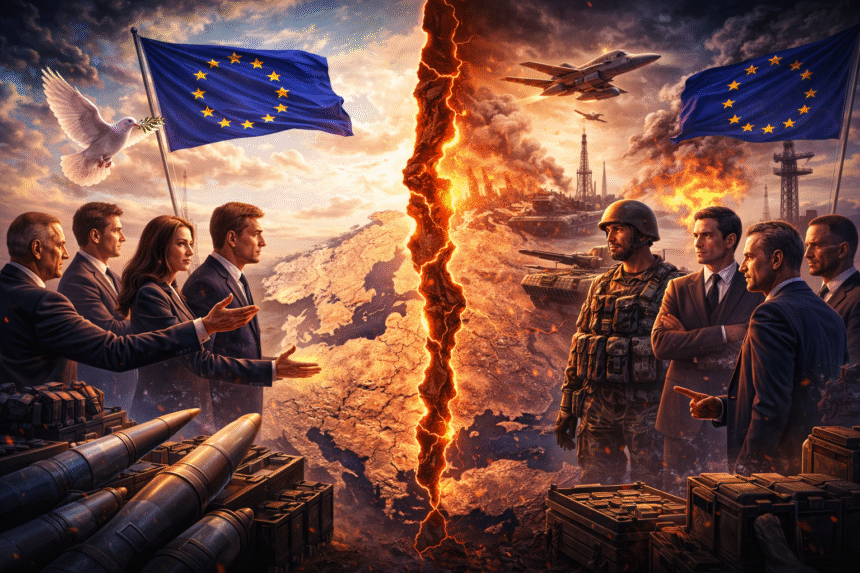
At the heart of the disagreement lies a fundamental split in strategy. Some countries are advocating for diplomatic solutions, emphasizing negotiations, de-escalation, and political engagement as the most sustainable path forward. Others, however, are pushing for a more hardline approach, calling for increased military support, stronger sanctions, and a tougher posture against perceived threats.
This divergence reflects differing national priorities, historical experiences, and levels of exposure to security risks. Countries geographically closer to the conflict tend to favor a more assertive response, citing immediate security concerns. Meanwhile, others—particularly in Western and Southern Europe—are more cautious, warning that escalation could lead to broader instability and economic consequences.
The lack of consensus is increasingly visible in high-level meetings and policy discussions, where efforts to agree on joint measures have faced delays and compromises. While the European Union continues to present a unified front publicly, behind-the-scenes disagreements are complicating decision-making processes.
Analysts warn that these internal divisions could undermine Europe’s credibility on the global stage. A fragmented approach weakens the bloc’s negotiating power and risks sending mixed signals to both allies and adversaries.
The economic dimension is also playing a role in shaping national positions. Rising energy costs, inflation, and concerns about economic slowdown are prompting some governments to prioritize stability over confrontation. Others argue that failing to take a firm stance now could lead to greater risks in the future.
Despite these challenges, EU leaders are attempting to bridge the gap through ongoing dialogue and compromise. Efforts are underway to balance diplomatic initiatives with security measures, in an attempt to preserve unity while addressing diverse national concerns.
However, the longer the conflict continues, the more difficult it may become to maintain cohesion. Public opinion within member states is also evolving, adding further pressure on governments to adopt positions that align with domestic priorities.
For Europe, the stakes are high. The current divisions not only test the strength of the Union’s foreign policy framework but also highlight the broader challenge of maintaining unity in the face of complex and rapidly changing geopolitical realities.
As the situation develops, Europe’s ability to reconcile these differences will be crucial in determining both its internal stability and its role on the global stage.