

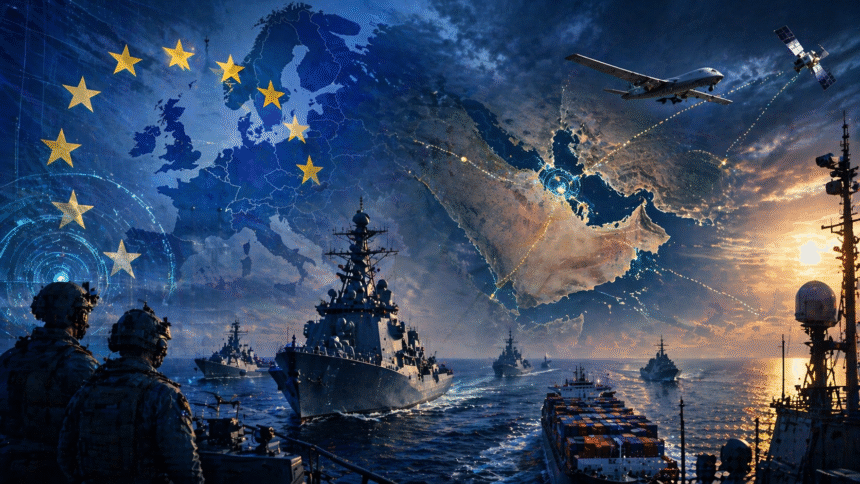
European leaders are rapidly advancing defense and security strategies to protect international shipping routes, as rising tensions in the Strait of Hormuz threaten global energy flows and maritime stability.
The Strait of Hormuz, a narrow but vital passage through which a significant share of the world’s oil supply passes, has once again become a focal point of geopolitical risk. In response, several European nations are coordinating efforts to enhance naval presence, surveillance capabilities, and rapid-response mechanisms to ensure the uninterrupted flow of energy and trade.
Discussions are underway among European governments to deploy additional maritime assets and strengthen joint operations aimed at deterring potential disruptions. These efforts include intelligence-sharing, increased patrols, and closer coordination with international partners to secure one of the world’s most strategic chokepoints.
Some countries are also exploring the expansion of existing maritime security missions to better address emerging threats, including attacks on commercial vessels and energy infrastructure.
The renewed focus on maritime defense comes amid growing concerns over energy security. Any disruption in the Strait of Hormuz could trigger sharp increases in global oil prices, directly impacting European economies already dealing with inflationary pressures and energy supply challenges.
Officials warn that even temporary instability in the region could ripple across global markets, affecting transportation, industry, and consumer prices.
While European leaders emphasize the need for decisive action, they are also navigating complex political considerations. Some countries are cautious about deeper military involvement without broader international mandates, while others advocate for a more assertive posture to protect economic interests.
This balancing act reflects Europe’s broader challenge: safeguarding critical infrastructure and trade routes without escalating tensions further in an already volatile region.
The situation is also reigniting debate within Europe about strategic autonomy and the continent’s ability to act independently in securing its interests. As reliance on global energy routes remains high, the current crisis is pushing European leaders to reassess long-term defense and energy strategies.
As tensions persist, Europe’s accelerated defense planning signals a shift toward a more proactive security posture. The coming weeks will be crucial in determining whether these measures can effectively protect global navigation—or whether the risks to energy supply and international trade will continue to grow.