

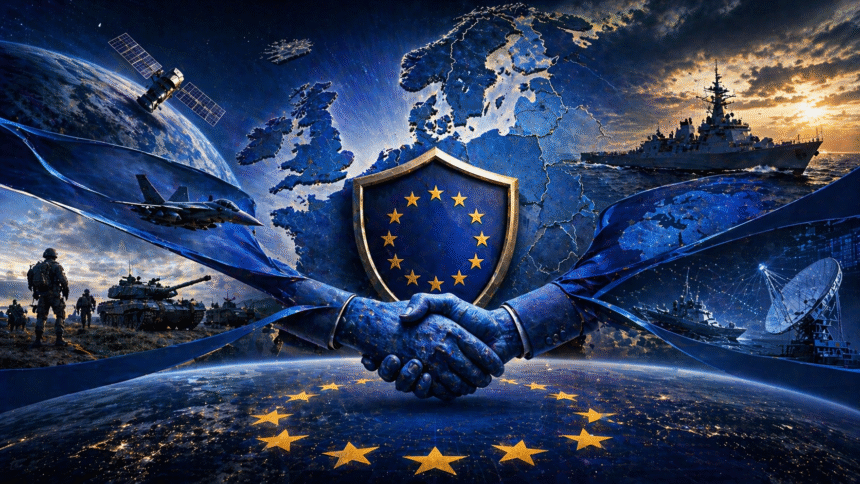
A growing debate is taking shape across Europe over the need to establish a joint security and defense system aimed at reducing reliance on the United States and strengthening the continent’s strategic autonomy.
European policymakers are increasingly questioning the long-term sustainability of depending heavily on Washington for security guarantees. While the transatlantic alliance remains central, recent geopolitical uncertainties have pushed leaders to consider a more self-reliant European defense framework.
The discussion reflects a broader ambition to ensure that Europe can respond independently to crises affecting its own security interests.
Several European leaders have proposed deeper military integration, including the creation of joint command structures, shared defense procurement systems, and coordinated deployment forces. These ideas aim to streamline capabilities across the continent and reduce fragmentation among national militaries.
Advocates argue that a unified system would improve efficiency, enhance rapid response capabilities, and strengthen deterrence against external threats.
Despite calls for greater independence, European officials emphasize that this initiative is not intended to replace the United States but to rebalance the partnership. The United States remains a cornerstone of Europe’s security architecture, particularly through its role in NATO and its advanced military capabilities.
However, concerns about potential shifts in U.S. foreign policy priorities have accelerated discussions on preparing for scenarios where American support may be less predictable.
The debate is not without divisions. Some countries strongly support deeper integration, while others remain cautious, citing concerns over sovereignty, budget constraints, and the complexity of aligning diverse military systems and doctrines.
There are also questions about funding, leadership, and how such a system would coexist with existing frameworks like NATO.
The push for a joint security system marks a potentially transformative moment for Europe’s defense policy. As global power dynamics evolve, the continent faces increasing pressure to take greater responsibility for its own security.
Whether these discussions lead to concrete institutional changes or remain part of a longer-term strategic vision, they highlight a clear trend: Europe is reassessing its role in global security and exploring new ways to ensure its defense in an uncertain world.