


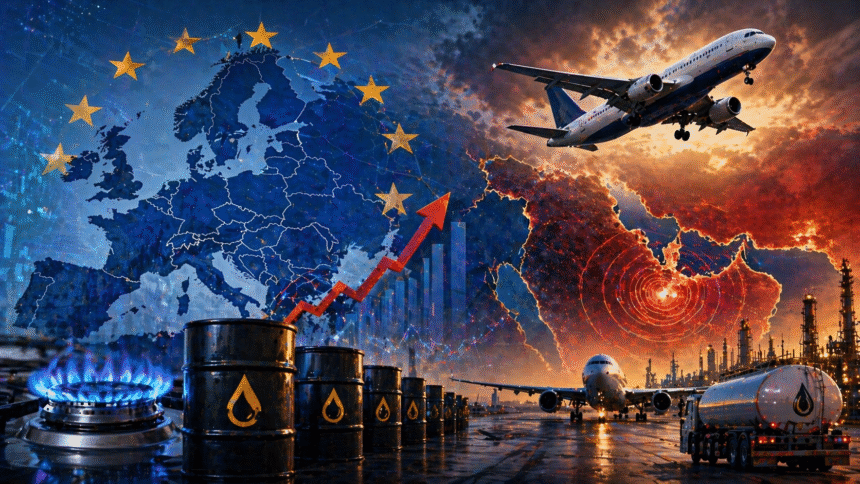
Europe’s energy landscape is once again under strain, as escalating tensions in the Middle East—particularly around the Strait of Hormuz—fuel fears of supply disruptions, rising costs, and a potential shortage of jet fuel across the continent.
The Strait of Hormuz remains a critical artery for global energy flows, handling a significant share of the world’s oil exports. Any instability in this corridor immediately reverberates through international markets, and European economies—heavily reliant on imported energy—are among the most exposed.
Energy analysts warn that even limited disruptions or heightened risk premiums can drive up costs sharply, particularly for refined products like jet fuel.
Airlines across Europe are closely monitoring fuel markets as jet fuel prices rise. With aviation demand steadily recovering, the prospect of tighter supply is raising concerns about higher operating costs, potential ticket price increases, and pressure on profit margins.
Industry experts note that aviation is especially vulnerable due to its dependence on consistent, high-volume fuel availability, making it one of the first sectors to feel the impact of supply shocks.
Beyond aviation, rising energy prices are feeding into broader inflationary pressures. Transport, logistics, and manufacturing sectors are already experiencing increased costs, which could ultimately be passed on to consumers.
European governments are now facing renewed pressure to balance economic stability with energy security, as households and businesses brace for potential price surges.
The current situation is also exposing Europe’s ongoing challenge: reducing dependency on external energy sources while managing immediate supply needs. Efforts to diversify energy imports and invest in renewables have accelerated in recent years, but short-term vulnerabilities remain.
Policymakers are exploring contingency measures, including strategic reserves, alternative supply routes, and coordinated responses with international partners.
As tensions persist in the Middle East, uncertainty continues to dominate energy markets. The risk of sudden price spikes or supply interruptions keeps Europe on edge, with policymakers and industry leaders closely watching developments.
Europe’s latest energy concerns underscore the interconnected nature of global geopolitics and economic stability. With jet fuel emerging as a key pressure point, the coming period will test Europe’s ability to navigate yet another energy challenge while safeguarding growth and resilience.