

European leaders have expressed renewed support for diplomatic efforts aimed at ending the war in Ukraine, backing Ukrainian President Volodymyr Zelenskyy’s proposal for direct talks with Russian President Vladimir Putin in an attempt to achieve a ceasefire and reduce tensions across the region.
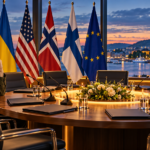
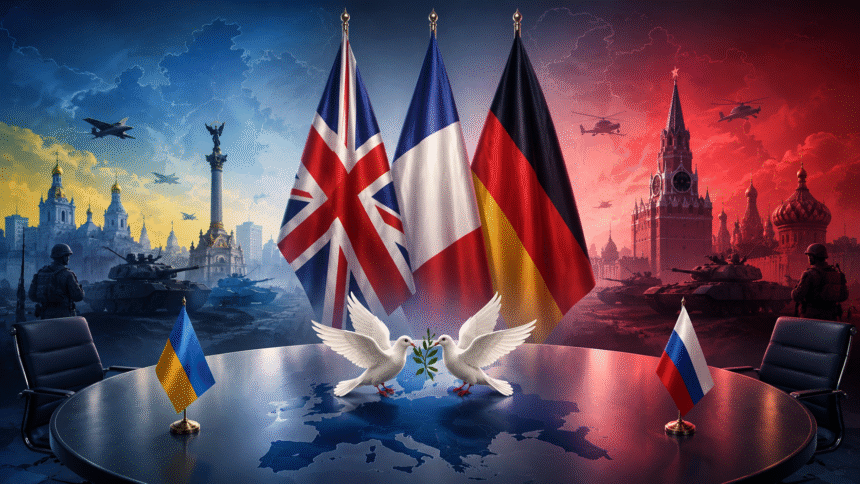
During a series of meetings and consultations held this week, leaders from Britain, France, and Germany emphasized that a political solution remains essential to ending the conflict, while reiterating their continued military and financial support for Kyiv. European officials stated that any negotiations must respect Ukraine’s sovereignty and territorial integrity, while also ensuring long-term security guarantees for Europe.
The initiative comes amid continued fighting on multiple fronts and growing concerns over the humanitarian and economic impact of the war. European governments are increasingly seeking ways to prevent further escalation, especially following intensified drone and missile attacks in recent weeks.
British officials confirmed that London remains committed to supporting Ukraine’s defense capabilities, particularly in the fields of air defense and intelligence cooperation. France and Germany also announced plans to strengthen military assistance programs, including additional air defense systems designed to protect Ukrainian cities and critical infrastructure from Russian attacks.
President Zelenskyy has repeatedly called for a direct meeting with Putin, arguing that only high-level negotiations can create a realistic path toward ending the conflict. While Moscow has not officially agreed to the proposal, diplomatic channels between various international actors remain active behind the scenes.
European analysts say the latest push for talks reflects a broader desire within Europe to stabilize the continent after years of war-related uncertainty, energy disruptions, and economic pressure. At the same time, European leaders insist that diplomacy cannot come at the expense of Ukraine’s security or independence.
Despite cautious optimism surrounding the proposal, many observers remain skeptical about the prospects of immediate breakthroughs due to the deep divisions between Moscow and Kyiv. Nevertheless, the European Union and its allies continue to encourage dialogue while maintaining pressure through sanctions and ongoing military support for Ukraine.
The coming weeks are expected to be crucial in determining whether the diplomatic momentum can translate into meaningful negotiations or whether the conflict will continue to escalate across Eastern Europe.