

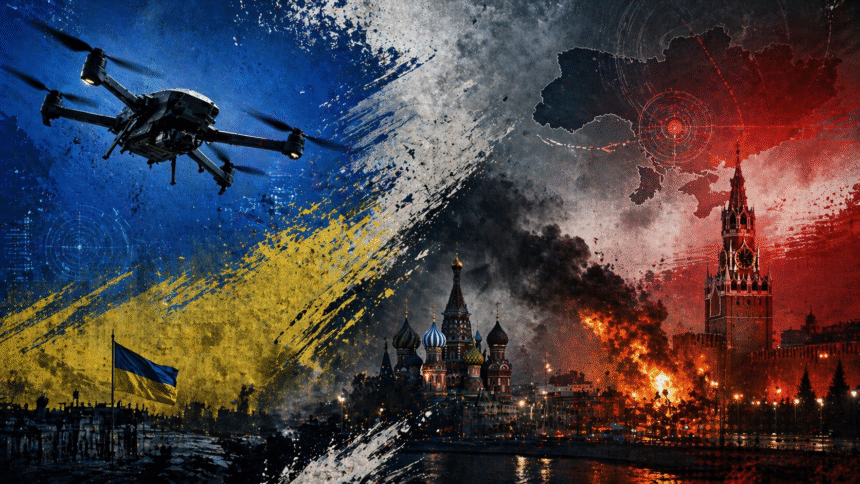
A Ukrainian drone attack deep inside Russian territory has resulted in one fatality and another injury, marking a continued escalation in hostilities between Ukraine and Russia.
According to local authorities, the strike targeted an area within Russia’s borders, causing damage to infrastructure and civilian areas. Emergency services confirmed that one person was killed and another wounded, underscoring the growing human cost of cross-border operations.
The attack highlights Ukraine’s increasing use of unmanned aerial systems to reach targets beyond the immediate frontlines, expanding the geographic scope of the conflict.
Russian officials condemned the strike, describing it as a deliberate escalation and warning of potential retaliation. Authorities reiterated that such attacks would not go unanswered, raising concerns about a possible intensification of military actions in the coming days.
Air defense systems were reportedly activated during the incident, though questions remain about how the drone managed to penetrate Russian airspace.
The use of long-range drones has become a defining feature of the war, allowing Ukraine to strike logistical hubs, energy infrastructure, and military facilities inside Russia. Analysts say this tactic aims to disrupt supply lines and apply pressure beyond the battlefield.
However, such operations also carry risks, including further escalation and potential retaliation targeting Ukrainian cities and critical infrastructure.
For Kyiv, cross-border strikes are seen as part of a broader strategy to weaken Russia’s operational capabilities. For Moscow, they reinforce the narrative of external threats and justify heightened security measures.
The incident reflects a shift toward a more expansive conflict, where both sides are increasingly willing to engage beyond traditional combat zones.
As the war continues with no immediate resolution in sight, incidents like this underline the fragile and volatile nature of the conflict. With each escalation, the risk of a wider confrontation grows, keeping the international community on edge.