


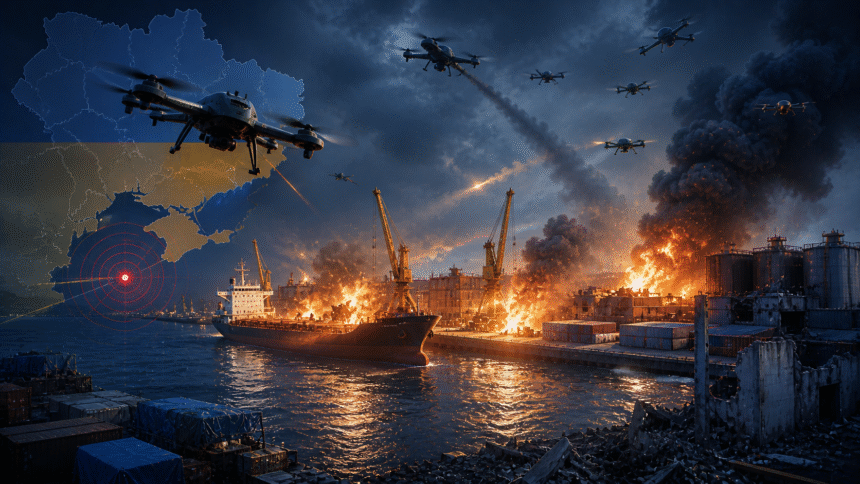
Russia has sharply increased its drone attacks on Ukrainian port infrastructure, with Kyiv saying that more than 800 drones were used against port facilities during the first four months of 2026. The figure represents a major escalation compared with the same period last year and shows that Ukrainian ports have become one of the central targets in Russia’s wartime strategy.
The southern Odesa region remains the main focus of these attacks. Its ports are vital to Ukraine’s economy because they allow the country to export grain, agricultural products, and limited volumes of metals. These exports provide hard currency revenues that help Ukraine sustain its wartime economy while continuing to resist Russia’s invasion.
According to Ukrainian officials, Russia used more than ten times as many drones against port infrastructure in the first four months of 2026 as it did during the same period in 2025. This suggests a deliberate shift by Moscow toward economic warfare, targeting not only military positions but also the trade routes that keep Ukraine financially connected to the world.
Despite the intensified attacks, Ukraine says its ports have continued operating. Infrastructure Minister Oleksii Kuleba said Ukrainian ports processed more than 30 million metric tons of cargo since the beginning of the year. This figure reflects both the importance of the ports and Ukraine’s effort to keep export routes open under constant threat.
The damage, however, has been severe. Since Russia’s full-scale invasion in February 2022, more than 900 port facilities and 177 civilian vessels have been damaged or partially destroyed, according to Ukrainian data cited in recent reports. The repeated strikes have increased risks for workers, shipping companies, insurers, and foreign buyers relying on Ukrainian exports.
The attacks are also part of a wider battle over the Black Sea. Russia has repeatedly targeted Ukrainian ports, while Ukraine has expanded its own long-range drone campaign against Russian oil terminals, ports, and vessels. This has turned maritime infrastructure into a major battlefield, where each side seeks to weaken the other’s ability to trade, export, and finance the war.
For Russia, striking Ukrainian ports serves several purposes. It threatens Ukraine’s export income, disrupts logistics, raises shipping costs, and sends a message to international markets that the Black Sea remains unstable. For Ukraine, keeping these ports open is not only an economic necessity but also a symbol of resilience.
The escalation could also affect global food security. Ukraine remains an important grain exporter, and any major disruption to its ports can create pressure on supply chains, especially for countries that depend on Black Sea grain shipments. Even when exports continue, repeated attacks can raise insurance costs and reduce confidence among shipping operators.
The latest wave of attacks shows that the war is increasingly being fought far beyond the front lines. Ports, tankers, rail links, warehouses, energy terminals, and export corridors have become strategic targets. Russia’s intensified drone campaign against Ukrainian ports is therefore not only a military development, but also an economic warning.
In the end, the message from Kyiv is clear: Russia is trying to weaken Ukraine by attacking the infrastructure that keeps its economy alive. But Ukraine’s continued port operations show that Moscow’s pressure has not yet succeeded in cutting the country off from global trade.