


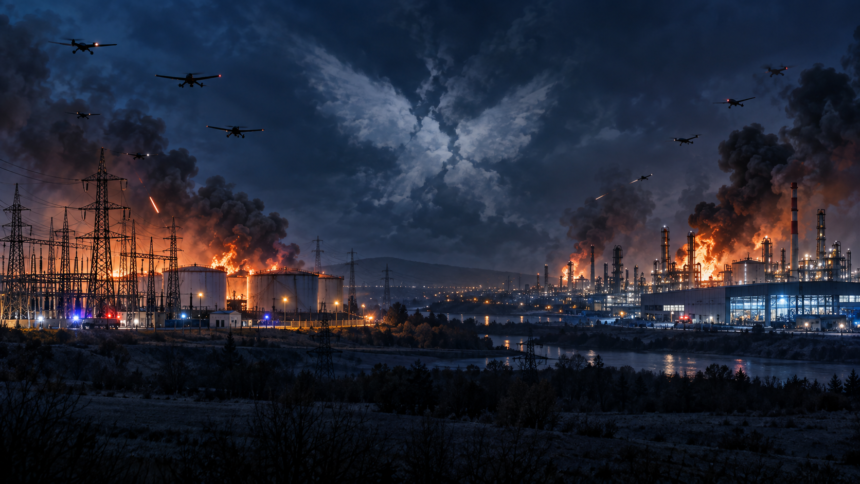
Russia and Ukraine have continued attacking each other’s energy and industrial infrastructure despite renewed discussions about a possible agreement to suspend strikes on such targets.
Ukrainian officials said Russia launched approximately 200 drones overnight against Kyiv and several other regions. The attacks killed at least two people and damaged petrol stations in the Ukrainian capital, as well as energy and port infrastructure elsewhere in the country.
Explosions were reported across Kyiv as air-defence systems attempted to intercept incoming drones. Emergency crews were deployed to affected locations to extinguish fires, assess structural damage and restore disrupted services.
Ukraine responded by striking targets inside Russia. President Volodymyr Zelenskyy said Ukrainian forces attacked an oil refinery in Syzran, located in Russia’s Samara region along the Volga River. Kyiv also reported strikes against facilities associated with drone production in the Taganrog and Oryol regions.
Russian regional officials confirmed that industrial and warehouse sites had been hit but did not fully identify all the targeted facilities or disclose the extent of the damage. The exchange demonstrated that both sides continue to view energy infrastructure and military manufacturing sites as strategically important targets.
The attacks came after US President Donald Trump said Russia and Ukraine had agreed to stop targeting each other’s energy facilities. However, neither side announced the immediate implementation of a formal ceasefire.
Zelenskyy said Ukraine was prepared to halt attacks on Russian energy targets if Moscow provided credible guarantees and stopped its own strikes. The Kremlin welcomed the general idea of an energy truce but linked broader progress to additional demands, including protection for commercial shipping and the removal of sanctions imposed on Russia.
Previous attempts to establish limited ceasefires covering power plants, oil facilities and other essential infrastructure have struggled to hold. Moscow and Kyiv have repeatedly accused each other of violating earlier understandings.
Russia has relied heavily on drones and missiles to target Ukraine’s electricity network, fuel supplies and transportation infrastructure. Ukraine, meanwhile, has expanded its long-range drone campaign against Russian refineries, fuel depots and military production facilities.
The continuing attacks have consequences beyond the battlefield. Damage to refineries and export infrastructure can disrupt fuel supplies, increase transport costs and add pressure to international energy markets. Strikes affecting port facilities may also interfere with grain and commercial shipping routes.
With both countries maintaining their military operations, the latest exchange highlights the gap between diplomatic statements and conditions on the ground. Any effective energy ceasefire would require clear terms, independent monitoring and a mechanism for addressing alleged violations.
Until such arrangements are established, energy infrastructure is likely to remain a central target in the conflict. Reuters