

By using this site, you agree to the Privacy Policy and Terms of Use.
Accept
Euro Post.Euro Post.
Notification Show More
Aa
  • My Europe
    • Europe News
    • Social Issues
    • Immigration
    • EU Policies
    • EU Updates
  • World
    • Africa
    • Global Conflicts
    • Human Rights
    • Middle East
    • Latin America
    • Ukraine Crisis:
  • Business
    BusinessShow More
    Lamborghini Unleashes the Temerario: A Hybrid Supercar Poised to Surpass the Huracán
    July 26, 2025
    Is Waze Nearing the End of the Road? Google Maps Growth Raises Questions About the Future of the Navigation App
    July 26, 2025
    Germany Secures Fourth Conviction in €195 Million EU-Wide VAT Fraud Case Tied to Covid Mask Scam
    July 25, 2025
    AstraZeneca Commits $50 Billion Investment in U.S. Amid Tariff Pressures
    July 23, 2025
    ASML Shares Fall as Trump-Era Tariff Fears Cloud 2026 Growth Outlook
    July 17, 2025
  • Sport
  • Travel
  • Culture
    • Art/Design
    • Literature
    • Music
    • Film – TV
    • Fashion
Reading: EU Postpones Renewal of Sanctions on Russia for One Week
Share
Aa
Euro Post.Euro Post.
  • My Europe
  • World
  • Business
  • Sport
  • Travel
  • Culture
Search
  • My Europe
    • Europe News
    • Social Issues
    • Immigration
    • EU Policies
    • EU Updates
  • World
    • Africa
    • Global Conflicts
    • Human Rights
    • Middle East
    • Latin America
    • Ukraine Crisis:
  • Business
  • Sport
  • Travel
  • Culture
    • Art/Design
    • Literature
    • Music
    • Film – TV
    • Fashion
Follow US
  • Advertise
© 2021 Euro Post Agency.com. All Rights Reserved.
Euro Post. > Blog > My Europe > EU Updates > EU Postpones Renewal of Sanctions on Russia for One Week
EU Updates

EU Postpones Renewal of Sanctions on Russia for One Week

World News
By World News Published September 15, 2026
Share

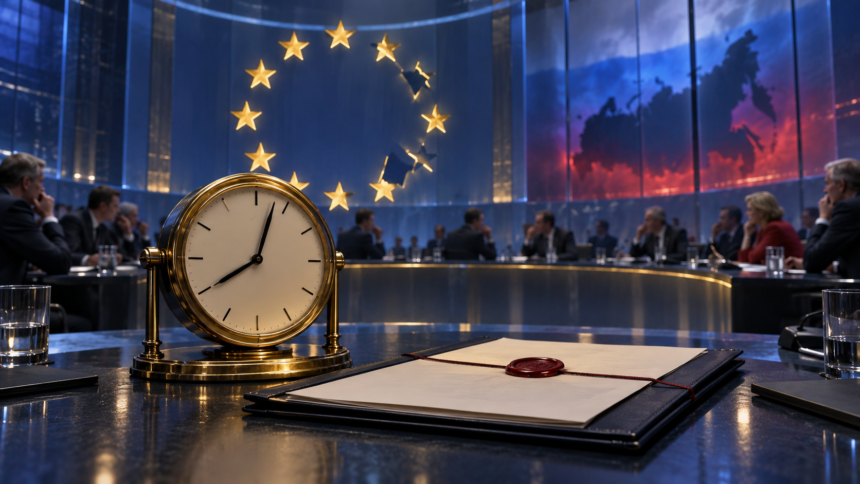
European Union ambassadors have agreed to extend sanctions against Russia for only seven days after disagreements among member states prevented the usual six-month renewal.

The measures, which had been due to expire on September 15, will now remain in effect until September 22. The temporary extension gives EU governments more time to negotiate a compromise and prevents the sanctions from lapsing while discussions continue.

The sanctions impose asset freezes and travel restrictions on nearly 3,000 Russian individuals and organisations linked to Moscow’s war against Ukraine or accused of supporting policies that threaten Ukraine’s sovereignty and territorial integrity.

Renewing the measures requires the unanimous approval of all 27 EU member states. This requirement has repeatedly led to difficult last-minute negotiations, as individual governments can delay or block an agreement unless their concerns are addressed.

The latest dispute reportedly centres on whether Russian-Uzbek billionaire Alisher Usmanov should be removed from the sanctions list. France and Slovakia have supported delisting him, while other member states remain reluctant to make concessions that could weaken the bloc’s pressure on Moscow.

Usmanov has business interests in industries including metals, mining, telecommunications and media. He has challenged the European restrictions through the courts and remains subject to sanctions imposed by both the EU and the United States.

France has maintained that its position is connected to national security considerations rather than a broader attempt to reduce pressure on Russia. Paris continues to publicly support Ukraine and the EU’s overall sanctions policy. Slovakia, meanwhile, has frequently raised objections during European negotiations concerning Moscow.

The temporary extension avoids an immediate legal gap, but it does not resolve the underlying disagreement. European diplomats must now reach a compromise before September 22 or face the possibility that the entire package of individual sanctions could expire.

The dispute illustrates the difficulties of maintaining unity among 27 governments after years of economic restrictions on Russia. Countries differ over the costs, effectiveness and political consequences of sanctions, even as the EU continues to describe them as a central element of its response to the war.

To reduce the risk of similar disruptions, the European Union previously renewed its broader sectoral sanctions—including restrictions affecting Russia’s energy, banking and trade sectors—for one year instead of the customary six-month period.

For now, the individuals and entities covered by the disputed package will remain subject to frozen assets and travel bans while negotiations continue. The coming week will test whether EU governments can preserve a united position or whether further concessions will be necessary to secure unanimous approval. Reuters
You Might Also Like

EU Considers Social Media and AI Chatbot Ban for Children Under 15

European Union Prepares New Sanctions Against Russia

European Union Considers New Sanctions Against Russia After Leipzig Airport Incident

European Union Approves Extra €6.1 Billion for Ukraine’s Defense

EU Awaits Iceland Referendum on Resuming Membership Talks

World News September 15, 2026 September 15, 2026
Share This Article
Facebook Twitter Whatsapp Whatsapp Email Print
What do you think?
Love0
Sad0
Angry0
Dead0
Previous Article Russia and Ukraine Continue Targeting Energy Facilities Despite Talk of a Truce
Next Article European Parliament Moves to Scrap ‘Emergency Brake’ on Carbon Border Tax

Stay Connected

16k Like
85k Follow
45.6k Subscribe
Telegram Follow
- Advertisement -

Latest News

Hungary’s New Government Starts Rolling Back Orbán-Era Laws
Europe News
Lagarde Warns Europe Could Be Cut Off From AI Technologies
Europe News
European Parliament Moves to Scrap ‘Emergency Brake’ on Carbon Border Tax
Europe News
Russia and Ukraine Continue Targeting Energy Facilities Despite Talk of a Truce
Ukraine Crisis:
Loading

Stay Informed,Europ’s Vioce Unfolded

Sign Up for Our Newsletter

Subscribe to our newsletter to get our newest articles instantly!

Loading
© 2022 Euro Post Agency. All Rights Reserved.