

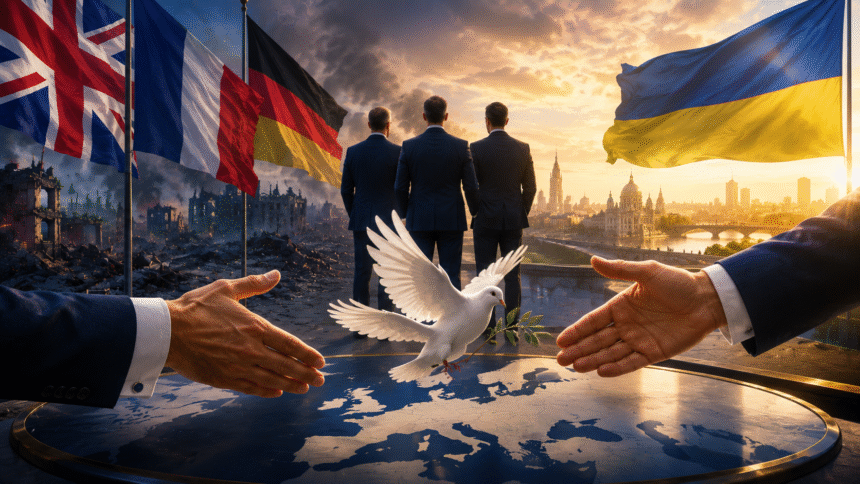
The leaders of Britain, France, and Germany have reaffirmed their support for international efforts aimed at achieving a ceasefire in Ukraine, stressing the importance of de-escalation and renewed negotiations between Kyiv and Moscow amid the continuing conflict.
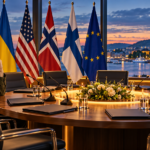
During recent diplomatic discussions, European leaders emphasized that any future peace process must include direct European participation, arguing that the war in Ukraine has become one of the most significant security challenges facing the continent in decades.
Officials from London, Paris, and Berlin stated that Europe cannot remain on the sidelines in negotiations that could shape the future security architecture of the region. The leaders also highlighted the need for coordinated diplomatic initiatives capable of reducing military tensions and preventing further humanitarian and economic damage.
The renewed European push comes as fighting continues across several parts of eastern and southern Ukraine, while international efforts to secure a lasting ceasefire have so far faced major obstacles. Despite ongoing military support for Kyiv, European governments are increasingly discussing pathways toward eventual negotiations and conflict management.
French and German officials stressed that diplomatic solutions remain essential alongside military and humanitarian assistance. Britain also reiterated its commitment to supporting Ukraine while encouraging international dialogue aimed at reducing escalation.
Analysts believe Europe’s growing involvement reflects concerns about the long-term economic and security consequences of the war. Rising energy costs, inflation, defense spending pressures, and broader geopolitical instability continue to affect European economies and political systems.
European leaders also warned that excluding Europe from future negotiations could weaken regional stability and undermine collective security interests. According to diplomats, the continent’s proximity to the conflict means European countries will remain directly affected by any political or military developments in Ukraine.
At the same time, differences remain between Western powers regarding the conditions for negotiations and the future shape of any peace settlement. While Ukraine continues to demand the restoration of its territorial integrity, Russia has maintained firm positions on several disputed regions.
Despite these challenges, European officials say diplomatic communication channels must remain open in order to prevent further escalation and create conditions for future peace efforts.
Observers note that Europe’s latest statements signal a broader shift toward balancing continued support for Ukraine with increasing diplomatic efforts to explore long-term political solutions to the conflict.