

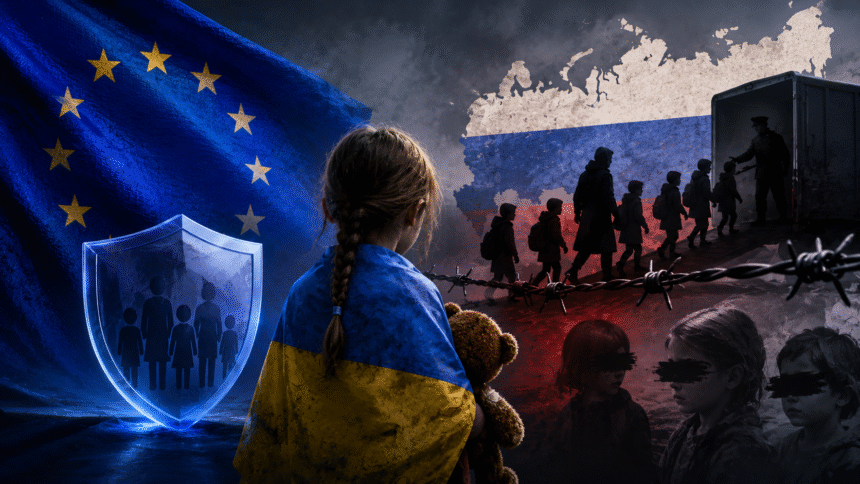
The European Union has imposed new sanctions on Russian-linked officials and institutions accused of involvement in the forced transfer, deportation, and indoctrination of Ukrainian children.
The measures target 16 individuals and 7 entities accused of helping move Ukrainian children to Russia or Russian-occupied territories, changing their identities, issuing Russian documents, placing them in adoption systems, or exposing them to political and military-style indoctrination. The sanctions include asset freezes, travel bans, and restrictions on financial support from EU citizens and companies.
According to European officials, nearly 20,500 Ukrainian children are believed to have been taken to Russia or Russian-controlled areas since the beginning of Moscow’s full-scale invasion in 2022. Only a small portion have reportedly been returned, making identification, tracing, and repatriation one of the most difficult humanitarian issues of the war.
The EU said the actions represent serious violations of international law and children’s rights. European officials argue that the forced transfer of children is not only a humanitarian crime, but also an attempt to erase Ukrainian identity and weaken future Ukrainian generations.
The sanctioned entities reportedly include institutions linked to Russia’s education system, as well as organizations involved in youth and military-patriotic programs. Several individuals named in the sanctions are connected to Russian-occupied territories and are accused of helping organize the transfer or ideological re-education of children.
The decision comes as the EU, Ukraine, and Canada co-hosted an international meeting in Brussels focused on returning Ukrainian children taken during the war. The meeting brought together officials and organizations involved in the International Coalition for the Return of Ukrainian Children, which was launched to coordinate diplomatic, legal, and humanitarian efforts.
For Ukraine, the issue has become one of the most painful symbols of the war. Kyiv says the removal of children from their families and communities is part of a broader Russian campaign to destroy Ukrainian identity. Moscow has denied wrongdoing and has often framed the transfers as humanitarian evacuations, but European officials reject that explanation.
The sanctions also add pressure on Russia at a time when international legal bodies continue to investigate alleged war crimes in Ukraine. The International Criminal Court previously issued arrest warrants linked to the unlawful deportation of Ukrainian children, including against Russian President Vladimir Putin.
The EU’s latest move shows that the issue of Ukrainian children is no longer only a humanitarian concern, but a central part of Europe’s sanctions strategy against Moscow. By targeting officials, institutions, and indoctrination networks, Brussels is trying to increase the cost of what it describes as Russia’s systematic attempt to remove children from Ukraine’s national and cultural identity.