

France has started testing Tesla’s advanced driver-assistance technology on public roads as European authorities consider whether the system should be approved for wider use across the European Union.
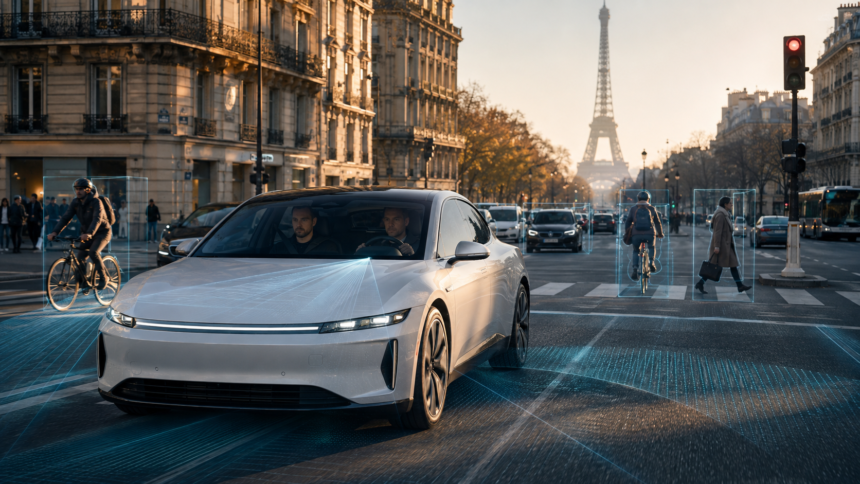
French Transport Minister Philippe Tabarot said the government is conducting its own assessment of Tesla’s Full Self-Driving system, commonly known as FSD. Two vehicles supplied by the company are being used to examine how the technology performs under French road and traffic conditions.
Despite its name, FSD does not make a Tesla fully autonomous. The system can steer, accelerate, brake and respond to surrounding traffic, but it still requires an attentive driver who remains responsible for the vehicle and must be ready to intervene at any moment.
The French tests will focus on several safety concerns previously raised by authorities, including speed management, driver-attention monitoring and the system’s ability to respond correctly to European road signs, intersections and complex urban environments.
France had earlier expressed reservations about approving the technology. Months of technical discussions with Tesla, however, have led the government to begin field testing so regulators can independently verify the company’s data and evaluate whether remaining concerns have been addressed.
The review comes after the Netherlands granted provisional approval for testing the system. Belgium, Denmark, Estonia and Lithuania have also taken steps to assess the technology, building momentum toward a possible coordinated European decision.
Results from the French trials are expected by mid-to-late September. Their findings could influence France’s position in a potential European vote later in the year on whether Tesla’s system should receive broader regulatory approval.
Tesla argues that its technology can improve road safety by reducing human error and assisting drivers in demanding traffic situations. Critics caution that the system’s name and capabilities could cause motorists to overestimate its level of autonomy, potentially leading to distraction or inappropriate reliance on automated functions.
European regulators have generally adopted a cautious approach toward autonomous-driving systems, requiring manufacturers to demonstrate that new features comply with strict safety, liability and data-protection standards.
France’s participation represents an important step for Tesla because it is one of Europe’s largest automotive markets and carries considerable influence in EU transport policy. A favorable assessment could help clear the way for broader deployment, while unresolved safety concerns could delay or restrict the system’s introduction.
The trials highlight Europe’s attempt to balance technological innovation with public safety as increasingly capable automated-driving features move closer to everyday use.