

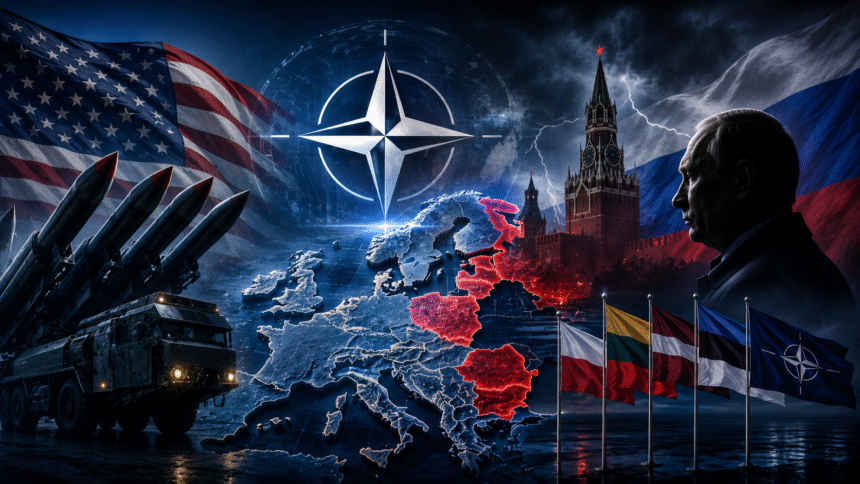
A growing political and security debate is unfolding across Europe as the United States discusses the possible expansion of its nuclear weapons hosting program with NATO allies on the alliance’s eastern flank.
According to diplomatic and defense sources, Washington has opened consultations with several NATO members regarding the potential deployment or hosting of additional American nuclear weapons in Europe, particularly in countries closer to Russia’s borders such as Poland and the Baltic states. The discussions come amid continuing tensions with Moscow, the prolonged war in Ukraine, and renewed concerns about European security architecture.
The issue has rapidly become one of the most sensitive geopolitical debates inside NATO since the Cold War.
For decades, the United States has maintained a limited number of nuclear weapons at military bases in several European NATO countries under the alliance’s nuclear sharing arrangements. Traditionally, these weapons have been hosted in Western European states including Germany, Belgium, Italy, the Netherlands, and Turkey.
However, Russia’s invasion of Ukraine and repeated nuclear threats from senior Russian officials have transformed security calculations across Eastern Europe. Governments in countries geographically closer to Russia increasingly argue that NATO’s military posture must adapt to what they describe as a more dangerous and unpredictable regional environment.
Poland has emerged as one of the strongest supporters of expanding NATO’s deterrence capabilities. Polish officials have repeatedly signaled openness to deeper nuclear cooperation with the United States, arguing that stronger deterrence is necessary to prevent further Russian aggression in Eastern Europe.
The Baltic states — Estonia, Latvia, and Lithuania — have also increased pressure for stronger NATO military guarantees as concerns grow over regional stability near Russia’s western borders.
Supporters of the proposal argue that expanding the nuclear hosting program would strengthen NATO’s deterrence posture and send a clear signal that the alliance remains prepared to defend all member states. Advocates believe that a stronger forward presence could reduce the risk of Russian escalation by increasing the perceived costs of any future military confrontation.
Critics, however, warn that the move could dramatically escalate tensions between NATO and Moscow and potentially trigger a new arms race in Europe. Some European political parties, peace organizations, and arms control advocates argue that deploying additional nuclear weapons closer to Russia could increase instability rather than improve security.
Russian officials have already condemned reports of the discussions, accusing NATO of pursuing “provocative military expansion” near Russian territory. Moscow has repeatedly framed NATO’s eastern military buildup as a direct threat to Russian national security and has used similar arguments to justify its aggressive military posture in recent years.
Security analysts note that the debate reflects a broader transformation taking place inside NATO. Since the outbreak of the Ukraine war, the alliance has shifted from focusing primarily on crisis management and overseas operations toward preparing for long-term confrontation and deterrence against Russia.
At the same time, European governments remain divided over how far the alliance should go in strengthening its nuclear posture. While Eastern European members generally support tougher measures, some Western European countries remain cautious about policies that could further militarize the continent or weaken future arms control negotiations.
No final decisions have been announced, and officials insist that consultations remain at an early stage. Nevertheless, the discussions themselves already demonstrate how deeply the war in Ukraine has reshaped Europe’s security environment and revived nuclear strategy debates that many believed had largely disappeared after the end of the Cold War.
As the conflict in Ukraine continues with no clear resolution in sight, Europe once again finds itself confronting questions about deterrence, military escalation, and the balance between security and stability in a rapidly changing geopolitical landscape.