

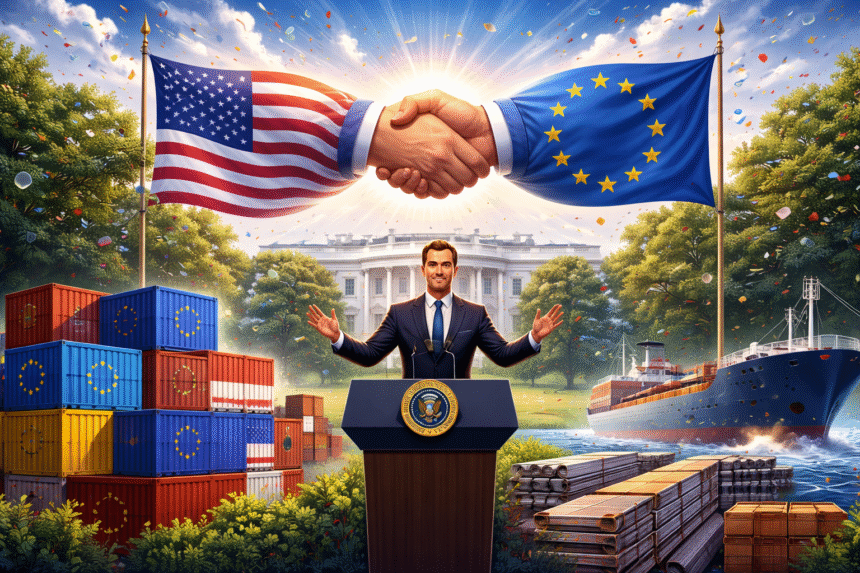
The American president has announced a temporary suspension of tariffs imposed on several European countries, citing what he described as “meaningful progress” in ongoing negotiations related to the Arctic region.
The decision marks a significant easing of trade tensions between Washington and European capitals, which had escalated in recent months amid disputes over strategic influence, security cooperation, and economic interests in the Arctic. The tariffs, which targeted key European exports, were widely viewed as a pressure tool linked to broader geopolitical negotiations rather than purely economic concerns.
Arctic Talks at the Center
According to officials familiar with the discussions, the negotiations focus on governance, security coordination, and economic access in the rapidly changing Arctic region, where melting ice has increased interest in shipping routes, energy resources, and military presence. Greenland, in particular, has emerged as a focal point of strategic competition among Western allies.
The US president stated that the suspension reflects “constructive engagement” and a willingness on both sides to pursue dialogue rather than confrontation. However, he emphasized that the measure is conditional and could be reversed if talks stall.
European Reaction
European leaders cautiously welcomed the announcement, viewing it as a positive step toward stabilizing transatlantic relations. Several EU officials stressed that cooperation in the Arctic must be based on mutual respect, international law, and shared security interests, rather than unilateral pressure.
At the same time, European diplomats underlined that the tariff suspension does not resolve underlying disagreements, particularly regarding decision-making authority and long-term strategic influence in the region.
Trade and Geopolitics Intertwined
Analysts note that the episode highlights the increasingly blurred line between trade policy and geopolitical strategy. The use of tariffs as leverage in security-related negotiations reflects a broader shift in global diplomacy, where economic tools are increasingly deployed to achieve strategic objectives.
Markets reacted cautiously to the announcement, with European exporters welcoming short-term relief while remaining alert to the possibility of renewed trade measures.
As negotiations continue, both sides face pressure to translate diplomatic progress into a durable framework that prevents future escalation and preserves stability in one of the world’s most strategically sensitive regions.