


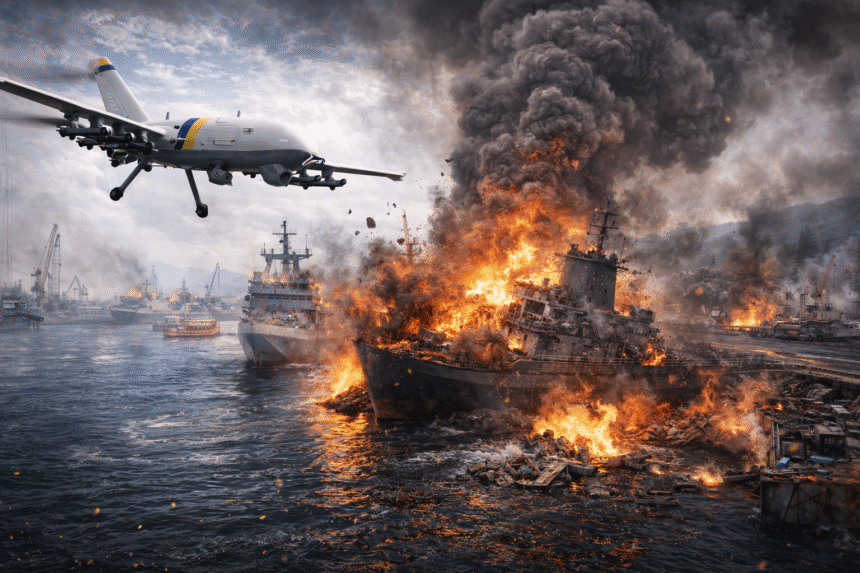
A Ukrainian drone attack that struck ships in Russia’s Krasnodar region has added a new layer of complexity to the war, highlighting the growing reach of Kyiv’s capabilities and raising concerns over security in the Black Sea.
The incident reportedly targeted vessels near key maritime and port infrastructure in Krasnodar Krai, a strategically important area that serves as a gateway between southern Russia and the Black Sea. While Russian authorities have downplayed the scale of the damage, the attack underscores the increasing vulnerability of coastal and logistical assets far from the main front lines.
Strategic and Military Impact
The strike signals a continued shift in Ukraine’s approach toward asymmetric warfare, using drones to disrupt Russian supply routes and naval operations. Attacks on ships—even if limited—force Russia to divert air defenses, naval patrols, and surveillance resources to protect ports and coastal zones, stretching military capacity across a wider area.
Military analysts note that such incidents complicate Russia’s ability to use Black Sea routes for logistics and trade, particularly for fuel, grain, and military supplies. Even temporary disruptions can have outsized operational consequences.
Economic and Infrastructure Risks
Krasnodar plays a key role in Russia’s export and transport network, especially through ports linked to energy and agricultural shipments. Any perceived threat to maritime traffic can raise insurance costs, slow shipping, and disrupt commercial flows—effects that extend beyond the immediate damage caused by the strike.
The attack also reinforces concerns among shipping companies operating in or near the Black Sea, potentially increasing caution and rerouting decisions that affect regional trade.
Political and Escalation Concerns
Politically, the incident fuels Moscow’s narrative of Ukraine expanding the battlefield, while Kyiv frames such strikes as legitimate actions against military-linked targets supporting Russia’s war effort. The episode may harden positions on both sides, complicating diplomatic efforts and increasing the risk of retaliation.
At the same time, the attack sends a message to Ukraine’s partners that Russian territory and assets are no longer immune from drone warfare, potentially influencing debates over air defense support and escalation management.
Broader Implications
As drone technology becomes more central to the conflict, strikes like the one in Krasnodar illustrate how the war is evolving beyond traditional front lines. The consequences are not limited to physical damage but include strategic uncertainty, economic pressure, and heightened regional instability—all of which point to a conflict that continues to widen in scope as it drags on.