

The European Union announced a new Arctic strategy on Tuesday, seeking to strengthen maritime security, protect submarine cables and expand icebreaker capabilities as climate change and geopolitical competition reshape the region.
Presented by the European Commission and EU foreign policy chief Kaja Kallas, the strategy brings together security, climate action, economic development and support for Arctic communities. It reflects growing European concern about the stability of its northern neighbourhood.
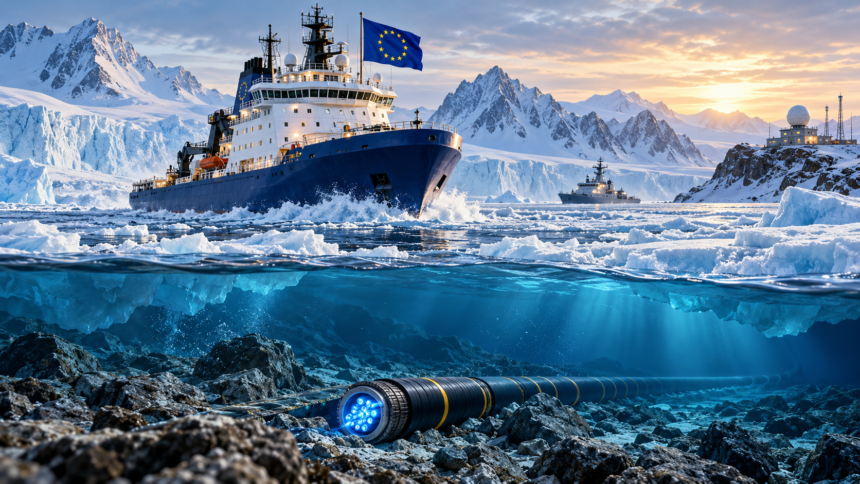
Protecting undersea communications infrastructure is a central priority. The EU plans to support stronger monitoring, protection and repair capabilities for cables in the North Atlantic and Arctic, alongside a secure submarine connection linking Greenland directly to the bloc.
The proposals also include a maritime security hub, investment in surveillance technologies and stronger icebreaker capabilities. These measures are intended to improve Europe’s ability to operate in Arctic waters and detect threats to shipping and critical infrastructure.
The initiative comes as retreating sea ice opens new shipping routes and increases access to resources. The Arctic is warming roughly four times faster than the global average, while Russia’s military presence and China’s growing interest are adding to strategic competition.
Despite the increased security emphasis, the EU reaffirmed its opposition to developing Arctic oil, coal and gas resources. However, the updated strategy omits an earlier commitment to pursue a multilateral legal ban on such developments, reflecting difficulties in securing international agreement.
With Denmark, Finland and Sweden among its members, the EU sees Arctic stability as directly connected to European security and prosperity. The strategy seeks to deepen cooperation with regional partners while supporting the people and communities facing the consequences of rapid environmental change.