

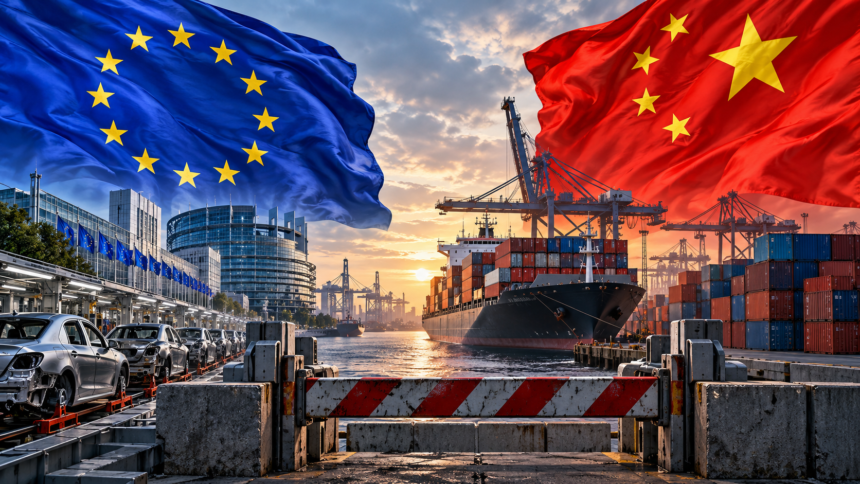
European Union leaders are preparing to examine the bloc’s trade relationship with China at a summit beginning Thursday, as concerns grow over competition facing European manufacturers. France and Germany have proposed measures to address the widening trade imbalance with Beijing.
The October 15–16 meeting will address economic competitiveness alongside Ukraine, the Middle East and migration. According to the European Council’s agenda, leaders will discuss global economic imbalances affecting European industry and possible steps to ease the burden of high energy prices on businesses and households.
The discussions follow a breakthrough in negotiations over Chinese hybrid vehicles. EU Trade Commissioner Maroš Šefčovič announced on October 9 an agreement that could reduce Chinese exports of hybrid and plug-in hybrid cars to the bloc by more than half. The arrangement forms part of Brussels’ effort to secure tangible progress in rebalancing trade.
However, European officials say action in the automotive sector alone will be insufficient. Speaking Wednesday, European Economic Commissioner Valdis Dombrovskis said the vehicle agreement needed to be followed by progress in other industries, together with improved access to the Chinese market for European companies.
Recent negotiations also covered access to essential industrial materials. Šefčovič said the understanding with Beijing would facilitate access to rare earths and improve market access for European products, including car parts, olive oil and footwear. Those products represent almost €4 billion in existing export value, according to the commissioner.
The summit will give leaders an opportunity to assess whether those commitments provide sufficient relief and determine their next steps. The terms of the hybrid vehicle arrangement still require clarification, leaving its implementation and the broader European response central to the discussions.