

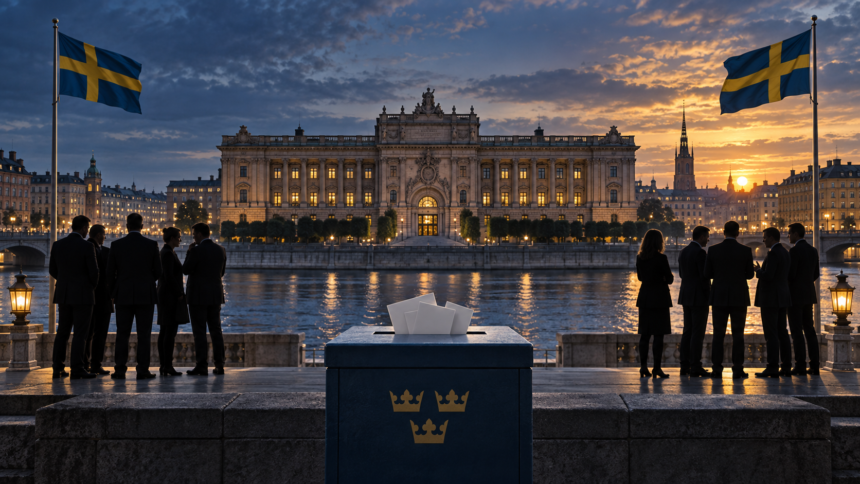
Sweden’s centre-left opposition is narrowly ahead in the parliamentary election, but the country may have to wait for a final result before talks on a new government can begin in earnest.
With about 95% of votes counted, preliminary projections give the opposition bloc 176 seats in the 349-seat Riksdag, compared with 173 for the governing right-wing bloc. Outstanding votes, including ballots cast abroad, could still change that margin.
The result puts former Prime Minister Magdalena Andersson, leader of the Social Democrats, in a possible position to return to office. Her party remains the largest in parliament, but a three-seat lead for the wider opposition would leave little room for disagreement among the parties whose support she would need to govern.
Prime Minister Ulf Kristersson has led a centre-right coalition that depends on support from the Sweden Democrats. That party lost ground in the election, adding to uncertainty over whether the current governing arrangement can continue. Both sides are awaiting the completed count before claiming a mandate. Associated Press, AFP
Even if the opposition’s lead holds, forming a government could prove difficult. The Centre Party has resisted cooperation with parties at either political extreme, while the opposition parties differ on how a future administration should be supported. The narrow projected majority means those differences could shape negotiations as much as the final seat count.
Election officials are expected to count remaining ballots and confirm the results in the coming days. Until then, the projected 176–173 split remains preliminary, and Sweden’s next government is undecided.