


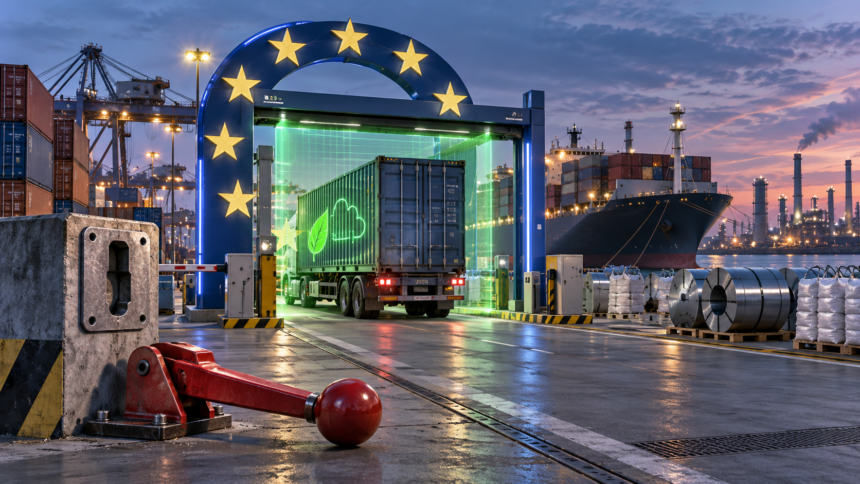
The European Parliament is moving to remove a proposed safeguard that would allow the European Union to temporarily suspend its carbon border tax when it causes a sudden and substantial increase in the cost of imported goods.
Lawmakers voted to delete the so-called “emergency brake” from planned amendments to the EU’s Carbon Border Adjustment Mechanism, or CBAM. The decision puts Parliament at odds with several member states that want to retain the ability to pause the charges during exceptional economic conditions.
The carbon border mechanism, which entered its definitive phase on January 1, 2026, imposes carbon costs on imports including steel, aluminium, cement, fertilisers, hydrogen and electricity. Its purpose is to ensure that foreign producers do not gain an unfair price advantage over European companies required to pay for their emissions under the EU’s carbon market.
The European Commission had proposed an emergency clause that could temporarily exempt certain imported products if serious and unexpected circumstances caused their prices to rise sharply. EU governments support keeping such an option, including in situations where the price of an affected product increases by more than 50% over six months.
However, Parliament’s position is that suspending the levy could weaken the mechanism and create uncertainty for businesses investing in cleaner production. Instead of pausing the carbon fee, lawmakers proposed using revenue raised by the system to compensate industries affected by higher costs.
The issue has become particularly sensitive for the agricultural sector. France previously called for the carbon charge on imported fertilisers to be suspended, arguing that it could increase costs for farmers already struggling with expensive energy, production inputs and intense international competition.
Supporters of the emergency provision say the EU needs flexibility to respond to market shocks and prevent the carbon mechanism from producing severe price increases. Several governments fear that inflexible charges could damage European manufacturers and place additional pressure on consumers.
Opponents argue that allowing exemptions during periods of high prices would undermine the credibility of the system. They warn that frequent suspensions could encourage companies to delay low-carbon investments and expose European producers to cheaper imports manufactured under less demanding environmental standards.
The disagreement comes as the EU considers extending the mechanism to additional manufactured products, including car components, washing machines and other goods containing carbon-intensive materials.
The European Parliament and member states must now negotiate the final version of the rules. The talks are expected to focus on whether any emergency suspension mechanism should remain and how revenue from the carbon levy should be used.
The outcome will help determine how the EU balances its climate goals with concerns about industrial competitiveness, inflation and the financial pressures facing European businesses and households. Reuters