

The European Union is considering additional sanctions against Russia following Germany’s accusation that Moscow was responsible for an attempted drone attack at Leipzig/Halle Airport, one of the country’s most important cargo and logistics hubs.
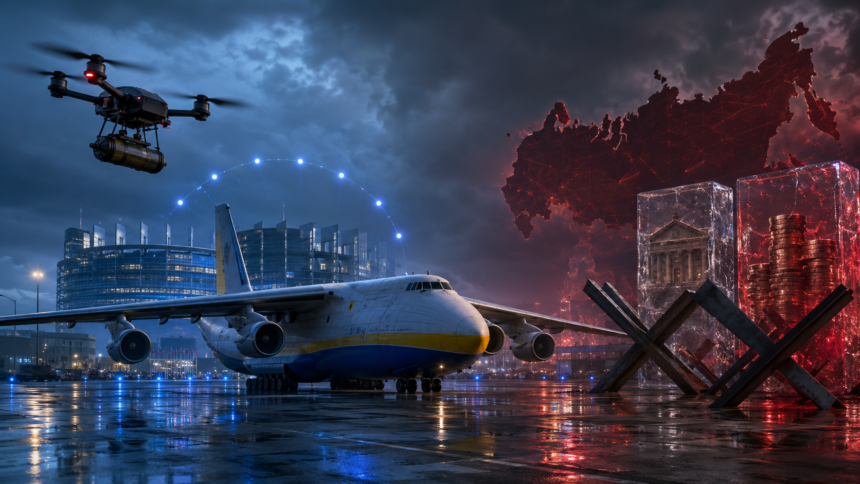
German authorities said the incident involved a drone carrying explosives that was discovered near a Ukrainian cargo aircraft. The explosives reportedly failed to detonate, but officials warned that the attempted attack could have caused significant casualties and damage at the airport.
Following intelligence and police investigations, the German government attributed the operation to Russian state actors. Moscow has denied responsibility and described the accusations as politically motivated.
Leipzig/Halle Airport occupies a strategically sensitive position in European logistics. Alongside its extensive commercial cargo operations, the airport supports the movement of supplies destined for Ukraine, making the alleged attack a matter of concern for Germany, the European Union and NATO.
EU foreign policy chief Kaja Kallas said the incident bore the characteristics of state-sponsored terrorism. European foreign ministers subsequently discussed possible measures against Moscow, including expanding the bloc’s sanctions list, freezing additional Russian assets and introducing further restrictions against individuals and organisations suspected of supporting Russian operations in Europe.
Germany has already announced several diplomatic countermeasures. These include closing the Russian consulate in Bonn and ending cooperation with a Russian cultural institution in Berlin. Berlin is also expected to support tighter controls on the entry of Russian nationals into Europe.
The Leipzig incident comes amid growing European concern over suspected sabotage, cyberattacks, espionage and drone operations targeting critical infrastructure. German police are separately investigating damage to electricity infrastructure in Brandenburg and an attack on a power substation in North Rhine-Westphalia.
Although investigators have not publicly established a connection between all these incidents, their proximity has intensified fears about the vulnerability of Europe’s transport, energy and communications systems.
Several European governments expressed solidarity with Germany and called for a coordinated response. France has also renewed its demand for stronger action against Russia’s so-called shadow fleet, which European officials say is being used to circumvent sanctions on Russian energy exports.
However, EU members must balance demands for a forceful response with concerns about escalation. The bloc is therefore expected to concentrate on financial, diplomatic and legal measures rather than direct military retaliation.
The discussions indicate that European policy towards Russia is increasingly extending beyond the war in Ukraine to include the protection of infrastructure and public security inside EU territory. If approved, the proposed sanctions would represent another attempt to raise the cost of suspected Russian hybrid operations while maintaining European support for Kyiv. Reuters