

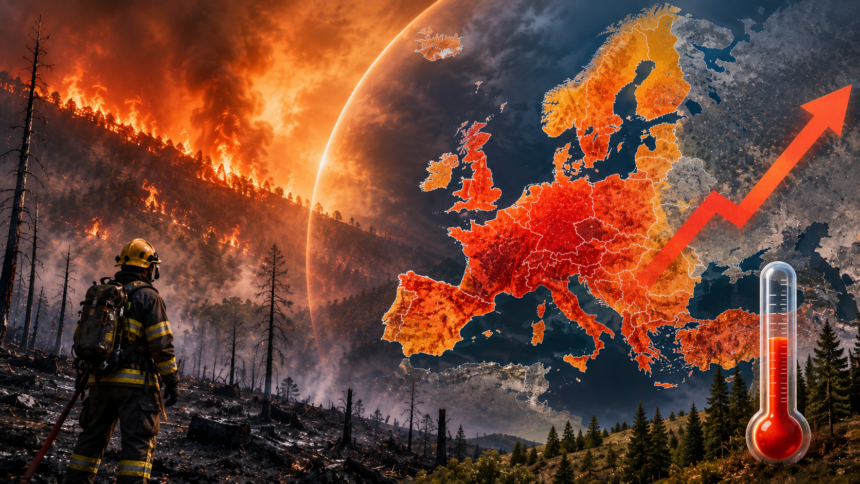
Europe could face a major increase in wildfire destruction in the coming decades even if global emissions are significantly reduced, according to new research warning that climate change will make fires increasingly difficult to contain.
The study, led by researchers at the Potsdam Institute for Climate Impact Research (PIK), estimates that under a relatively low-emissions scenario, around 39% more land could burn annually across Europe by the end of the century compared with current averages.
Researchers linked the projected increase to increasingly hot, dry and windy conditions, which create an environment in which vegetation dries more quickly and fires can spread rapidly. Lead author Maik Billing said substantial increases in burned area could occur even with comparatively limited global warming of around 1.8°C.
The outlook becomes considerably more severe under higher-emissions scenarios. If global temperatures rise to around 3.6°C above pre-industrial levels, the amount of European land burned by wildfires could nearly triple, according to the research.
However, the researchers also found that stronger wildfire management could dramatically reduce the damage. Improved prevention and response strategies could offset more than 70% of the projected increase in burned area, highlighting the importance of managing vegetation, reducing fuel accumulation and strengthening preparedness.
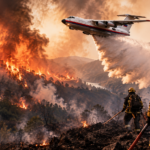
The warning comes during another destructive European wildfire season. More than 576,000 hectares had already burned across Europe by mid-August 2026, with major fires affecting countries including Belgium, Spain, Greece, Croatia, Portugal and France.
Scientists stress that firefighting alone will not be enough. Europe will need a combination of stronger forest and landscape management, better prevention and emergency preparedness, alongside global reductions in greenhouse-gas emissions, to limit the growing wildfire threat.