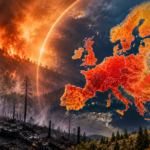


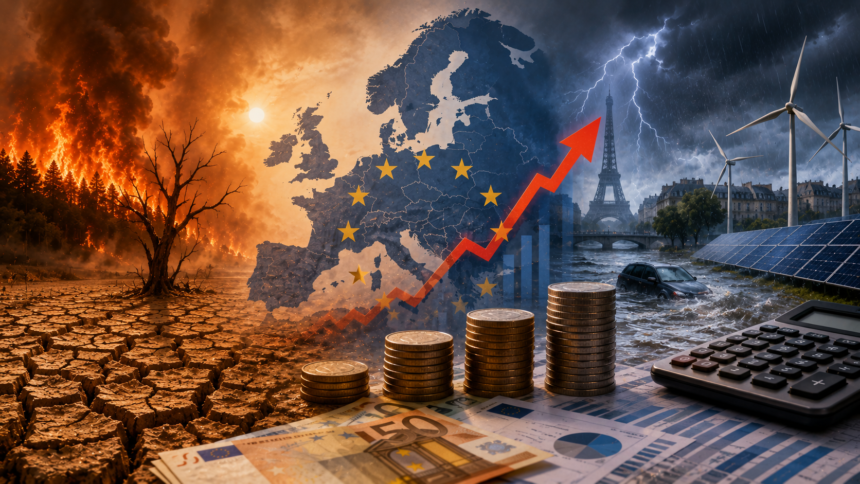
Europe is confronting a rapidly growing economic cost from climate change as heatwaves, droughts, wildfires and floods place increasing pressure on businesses, infrastructure and government finances, while investment in adapting to these threats remains far below spending planned for the clean-energy transition.
The scale of the financial damage is already substantial. Weather and climate-related extremes caused an estimated €822 billion in economic losses across the European Union between 1980 and 2024, according to European Environment Agency figures cited by Reuters. Around a quarter of that damage occurred in just the final four years of the period.
Europe is also warming faster than any other continent. A Reuters Breakingviews analysis notes that temperatures are rising by around 0.6°C per decade, while only about 23% of European households have air conditioning, highlighting how buildings and infrastructure remain poorly adapted to increasingly severe summer heat.
The economic consequences extend beyond physical destruction. Extreme heat reduces worker productivity, disrupts transportation, increases cooling costs and hurts sectors such as agriculture, manufacturing and hospitality. Estimates cited by Reuters suggest last summer’s European heatwaves generated about €43 billion in economic losses, while insured payouts amounted to only around €500 million.
At the same time, the EU’s investment priorities reveal a significant gap between preventing future warming and preparing for warming that is already unavoidable. Policymakers envisage almost €700 billion a year in public and private investment during the 2030s to meet clean-energy objectives, while estimated adaptation spending amounts to roughly €69 billion annually through 2050.
The burden is increasingly falling on governments because much climate-related damage remains uninsured. Only about a quarter of catastrophe losses linked to climate events are insured across the EU, with coverage in some countries below 5%. That leaves public budgets exposed to reconstruction and emergency-relief costs at a time when governments are already facing pressures from defence spending, debt and ageing populations.
The challenge for Europe is therefore no longer limited to cutting emissions. Economists and climate specialists increasingly argue that governments must also invest in stronger buildings, cooling systems, water infrastructure, wildfire prevention and disaster preparedness. Without faster adaptation, the economic bill from Europe’s changing climate could continue to rise even as the continent spends heavily on its transition to cleaner energy.