


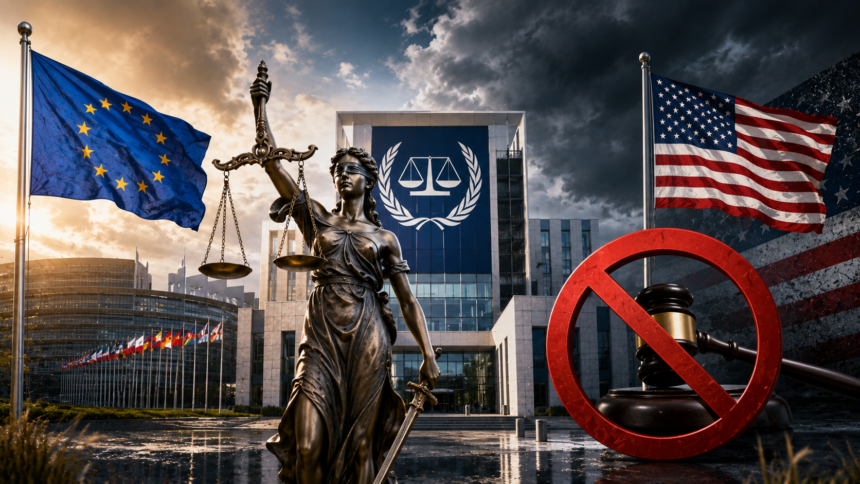
The European Union has renewed its support for the International Criminal Court after the United States imposed sanctions on ICC President Judge Tomoko Akane and Senior Trial Lawyer Abdoulaye Seye, deepening tensions between Washington and European allies over the court’s authority.
EU foreign policy chief Kaja Kallas said the bloc “deeply regrets” Washington’s decision and reiterated the EU’s “unwavering support” for the Hague-based court. She stressed that the ICC must be able to operate independently and without political pressure, intimidation or interference.
European Commission President Ursula von der Leyen and European Council President António Costa also backed the institution, arguing that its judges and officials must be able to carry out their responsibilities independently. European governments including Germany and the Netherlands have likewise defended the court.
The United States announced the sanctions on August 18. Washington says Akane and Seye were involved in ICC efforts concerning officials from countries that have not accepted the court’s jurisdiction. The measures freeze any assets the sanctioned officials hold within U.S. jurisdiction and restrict their access to the American financial system.
U.S. Secretary of State Marco Rubio has accused the ICC of overstepping its authority, particularly in cases involving the United States and Israel. Neither country is a member of the court, and Washington strongly opposes the ICC’s actions connected to Israeli officials and the Gaza war.
The ICC rejected the sanctions, describing them as an attack on judicial independence and pledging to continue carrying out its mandate independently and impartially. The court is responsible for prosecuting individuals accused of genocide, crimes against humanity, war crimes and the crime of aggression when its jurisdictional requirements are met.
The dispute highlights a widening transatlantic disagreement over international criminal justice. While Washington argues that the ICC threatens the sovereignty of non-member states, Brussels maintains that an independent court remains an essential part of the international system for combating impunity.