


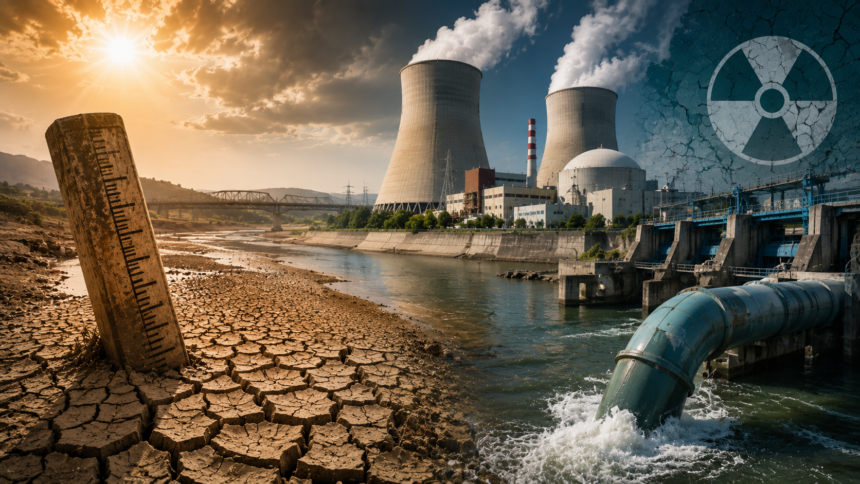
Romanian authorities are working to secure additional water supplies for the Cernavodă nuclear power plant as drought and extreme heat push water levels in the Danube River dangerously low, raising concerns that one of the country’s reactors could be forced to shut down.
The Cernavodă facility, Romania’s only nuclear power plant, relies on water from the Danube–Black Sea Canal system to cool its two operating reactors. Falling river levels have reduced the amount of water available, prompting authorities to consider emergency measures to maintain sufficient cooling capacity.
Romanian officials are now working on plans to redirect additional Danube water toward the plant, including adjustments to waterways and infrastructure feeding the facility. Authorities have stressed that the reactors remain safe and that any shutdown would be carried out as a precaution if cooling-water levels fall below operational requirements.
The situation is being closely monitored because Cernavodă plays a major role in Romania’s electricity system. Its two CANDU reactors provide roughly one-fifth of the country’s electricity, meaning an extended shutdown could tighten power supplies at a time when high temperatures are already increasing electricity demand for air conditioning and cooling.
Extreme heat and prolonged drought have caused water levels across parts of the Danube basin to decline significantly this summer. The conditions are creating broader problems for European economies, including restrictions on river transport, pressure on agriculture and additional challenges for electricity generation.
Nuclear plants require large and reliable supplies of water to remove heat generated during operation. Although reactors have multiple safety systems, insufficient access to cooling water can require operators to reduce output or temporarily shut units down to remain within regulatory limits.
The situation in Romania highlights a growing challenge for European energy infrastructure as increasingly frequent heat waves and droughts place pressure on power plants designed around historically more stable water supplies.
Authorities continue to monitor Danube levels and weather forecasts while attempting to maintain adequate water flows to Cernavodă. If drought conditions worsen, Romania could face difficult decisions over nuclear generation just as the wider European electricity system confronts rising summer demand.