

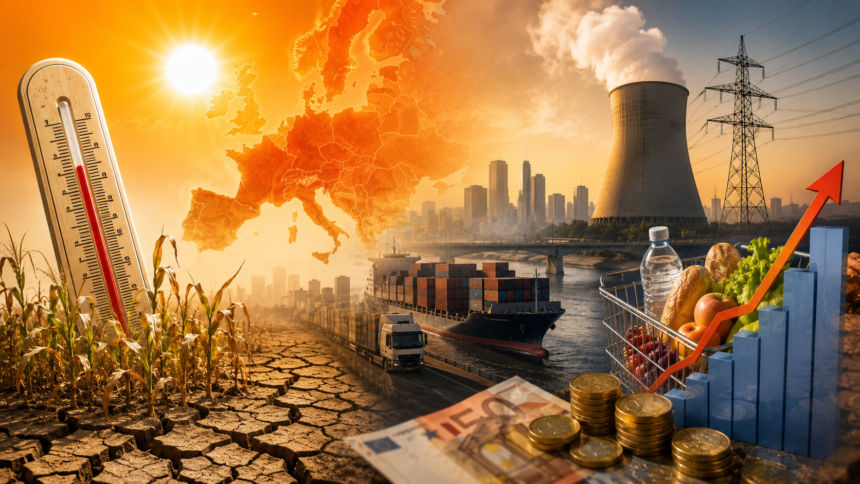
Europe’s intensifying heat wave is beginning to create economic consequences across the continent, placing pressure on agriculture, electricity supplies, transportation networks and government finances as temperatures reach record levels in several countries.
The latest extreme weather has pushed temperatures above 40°C in parts of Europe. Austria recorded a national high of 41.2°C, while governments across southern and central Europe introduced emergency measures to protect vulnerable populations and critical infrastructure. Italy placed all 27 cities covered by its heat-monitoring system under its highest health alert.
Agriculture is among the sectors facing the greatest pressure. Prolonged heat and drought can reduce crop yields and livestock productivity, potentially translating into higher food prices in the months ahead. European Central Bank research has warned that extreme summer temperatures can contribute directly to higher food inflation, making climate-related price pressures an increasingly important concern for policymakers.
The heat is also affecting transportation and supply chains. Falling water levels on major European rivers can restrict the amount of cargo carried by barges, potentially raising transportation costs for manufacturers that depend on waterways to move fuel, chemicals, agricultural products and industrial materials. Economic analysis has identified such supply-chain disruption as one of the channels through which prolonged heat can weaken European growth.
At the same time, electricity systems are being tested by increased demand for air conditioning and cooling. Hungary has introduced measures to reduce electricity consumption, while drought and unusually warm water are creating additional challenges for power generation in parts of the continent. Earlier heat episodes this summer also produced sharp increases in peak wholesale electricity prices in several European markets.
Governments face another layer of costs from emergency healthcare, firefighting, drought assistance and measures designed to protect vulnerable populations. Over time, authorities may also need to devote greater resources to climate adaptation, including cooling infrastructure, water management and improvements to transport and electricity networks.
The economic consequences therefore extend beyond the immediate disruption caused by record temperatures. As extreme heat becomes more frequent, economists increasingly view it as a structural risk to European growth and price stability, capable of simultaneously reducing productivity, disrupting supply chains and adding inflationary pressure.
For Europe, this summer’s heat wave is becoming not only an environmental and public-health emergency, but also another test of the continent’s economic resilience.