

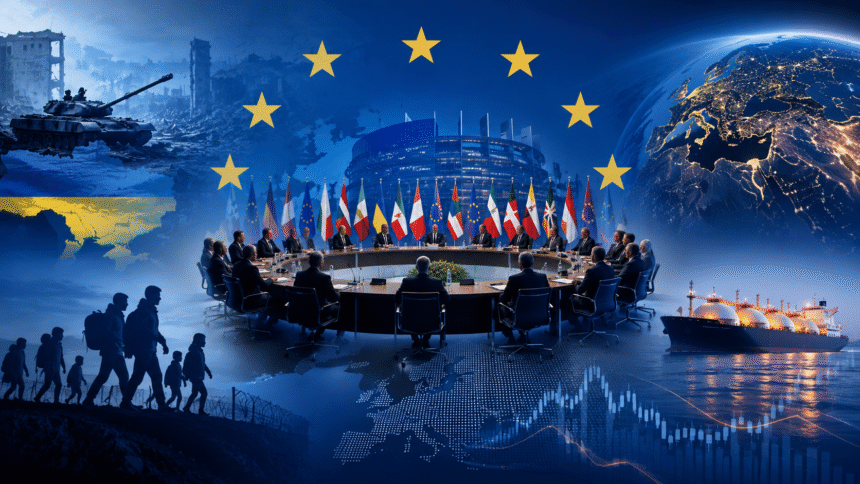
Support for Ukraine remains at the top of the agenda as EU member states continue to coordinate military, financial, and humanitarian assistance to Kyiv. Leaders are expected to discuss the future of European support mechanisms and assess the security implications of the ongoing conflict for the continent.
European security is another key topic, with officials examining ways to strengthen defense cooperation, increase military readiness, and address emerging threats. The discussions reflect a broader effort by European governments to adapt to a rapidly changing security environment marked by regional conflicts and global instability.
Migration policy is also expected to feature prominently during the summit. Leaders will review the implementation of recent migration reforms and explore measures aimed at improving border management, accelerating asylum procedures, and enhancing cooperation among member states in addressing migration pressures.
Economic issues are equally high on the agenda. Negotiations over the European Union’s long-term budget are expected to be complex, with governments seeking to balance spending priorities that include defense, energy security, infrastructure, and social programs. The outcome of these discussions will shape the bloc’s financial direction for years to come.
The summit is also taking place against the backdrop of rising tensions in the Middle East, which have renewed concerns about energy markets. European officials are closely monitoring developments in the region amid fears that disruptions to global energy supplies could increase fuel and electricity costs across Europe, potentially adding further pressure to inflation and economic growth.
As discussions continue in Brussels, the decisions made by European leaders are expected to influence not only the future direction of the European Union but also its response to a rapidly evolving international landscape.