


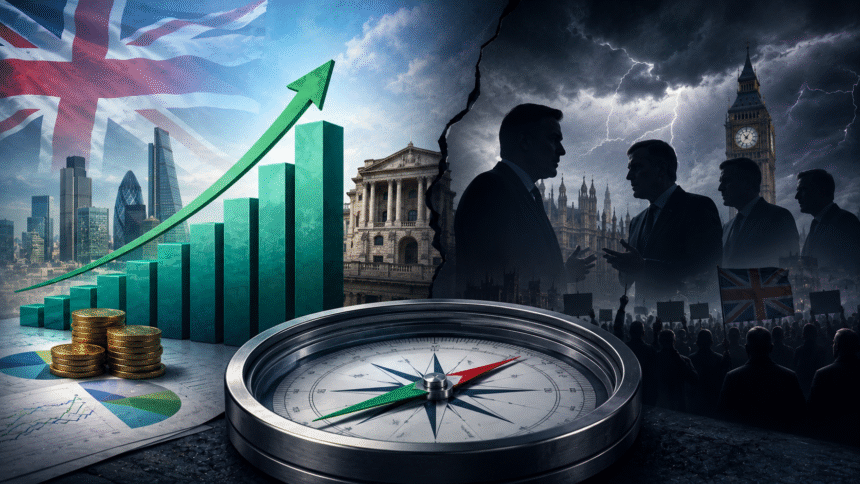
The International Monetary Fund has raised its outlook for the British economy, offering a cautious sign of confidence while warning that political instability could weaken growth, investment, and consumer confidence in the United Kingdom.
In its latest assessment, the IMF upgraded Britain’s 2026 growth forecast to 1.0%, up from its previous estimate of 0.8%. The Fund said the improvement was supported by stronger-than-expected economic performance and revised data showing better momentum than previously assumed.
The upgrade gives the British government a rare piece of positive economic news at a time of pressure over borrowing costs, inflation, and internal political uncertainty. Chancellor Rachel Reeves welcomed the IMF’s assessment, presenting it as support for the government’s approach of combining deficit reduction with targeted growth measures.
However, the IMF’s message was not entirely positive. It warned that domestic political turmoil could damage economic stability by discouraging investment and delaying consumer spending decisions. The warning comes amid growing questions over Prime Minister Keir Starmer’s leadership and wider uncertainty inside the Labour Party.
The Fund also urged Britain to maintain fiscal discipline, saying it should continue efforts to reduce borrowing rather than rely on broad, unfunded spending measures. It recommended that any cost-of-living support should be targeted, temporary, and affordable, especially as the country faces higher debt-servicing costs and pressure from global energy prices.
Inflation remains another concern. The IMF said UK inflation could rise to just under 4% by the end of the year, before returning toward the Bank of England’s 2% target in 2027, provided energy prices stabilize. It also advised the central bank to remain ready to adjust interest rates if inflation pressures persist.
Britain’s economic position remains fragile because of a combination of weak productivity, elevated borrowing costs, global instability, and the impact of energy shocks linked to Middle East tensions. These pressures have made investors more sensitive to political uncertainty and government spending decisions.
For the government, the IMF’s report offers both validation and warning. The growth upgrade suggests the economy is performing slightly better than expected, but the political warning shows that confidence can quickly weaken if markets believe fiscal policy is becoming unstable or unpredictable.
The central message is clear: Britain may be moving toward modest economic recovery, but that recovery depends heavily on political stability, disciplined public finances, and the government’s ability to protect households without undermining confidence in the country’s fiscal direction.