


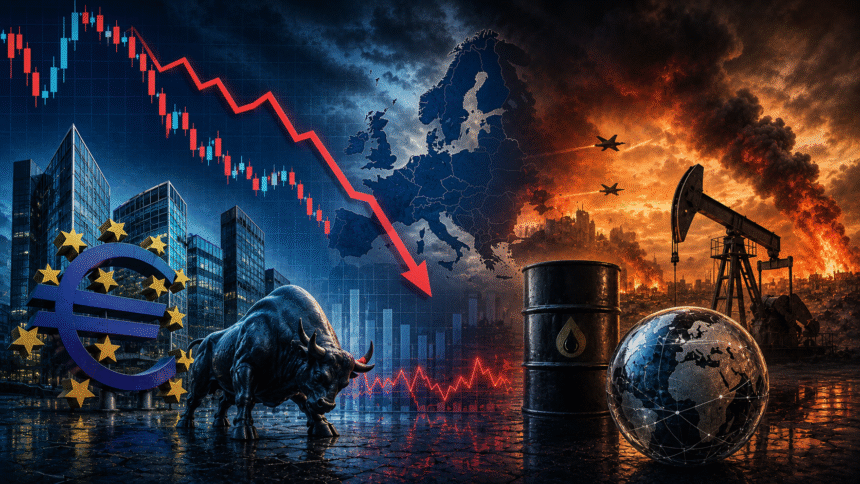
European financial markets are facing renewed pressure as investors react to rising geopolitical tensions in the Middle East and their potential impact on energy prices, inflation, supply chains, and global financial stability.
Recent trading sessions have shown how sensitive European markets remain to international crises. The pan-European STOXX 600 has experienced volatile movement, with investors shifting between cautious buying and broad sell-offs as oil prices, bond yields, and inflation expectations move higher. On May 18, European shares closed slightly higher after a turbulent session, but inflation fears linked to Middle East tensions continued to limit investor confidence.
The main concern for investors is energy. Any disruption to oil and gas flows from the Middle East, especially through critical routes such as the Strait of Hormuz, could push fuel prices higher and increase costs for European businesses and consumers. The European Central Bank has already warned that the war in the Middle East has made the economic outlook more uncertain, creating upside risks for inflation and downside risks for growth.
Higher oil prices also complicate the outlook for interest rates. If energy costs continue to rise, inflation could remain above target for longer, making it harder for central banks to cut rates or support growth. This has affected bond markets as well, with investors demanding higher yields in response to inflation risks and fiscal uncertainty. In Britain, long-term government bond yields recently climbed to multi-year highs amid global inflation fears and domestic political concerns.
Equity markets have also reflected the uncertainty. Earlier this month, European shares slipped in broad-based losses as Middle East tensions damaged risk sentiment, with Germany’s DAX among the hardest-hit major indexes.
Supply chains are another pressure point. Companies across Europe are monitoring shipping routes, fuel costs, insurance premiums, and delivery delays. If the conflict disrupts maritime trade or energy transportation, manufacturers, airlines, logistics firms, and retailers could face higher operating costs.
The pressure is not limited to stocks. Currencies, bonds, commodities, and corporate earnings expectations are all being affected by the same question: how long will geopolitical instability last, and how much damage will it cause to global trade and inflation?
For now, European markets remain caught between two forces. On one side, some companies continue to report strong earnings and investors still see opportunities in selected sectors. On the other, geopolitical risk is making markets more fragile, especially as higher energy prices threaten to revive inflation at a time when Europe is still trying to secure a stable economic recovery.
The coming weeks will be critical. If tensions ease and energy prices stabilize, European markets could regain confidence. But if the conflict expands or oil prices rise further, investors may continue to retreat from risk, placing European stocks, currencies, and government bonds under heavier pressure.