


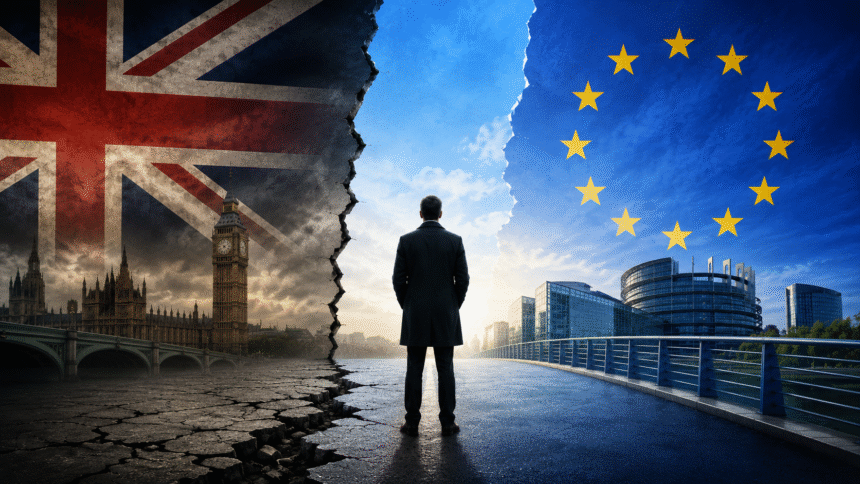
Britain’s debate over Brexit has returned to the political spotlight after senior Labour figures reopened questions about the country’s long-term relationship with the European Union.
Greater Manchester Mayor Andy Burnham said he is not calling for the United Kingdom to rejoin the EU, despite acknowledging that Brexit has caused damage to the country. Speaking amid growing political tension inside the Labour Party, Burnham argued that reopening the Brexit battle would risk deepening national divisions rather than helping Britain move forward.
Burnham’s comments come at a sensitive moment for Labour. He is widely viewed as a possible leadership challenger to Prime Minister Keir Starmer, whose authority has come under pressure following poor local election results and internal party criticism.
The debate intensified after former health minister Wes Streeting described Brexit as a “catastrophic mistake” and suggested that Britain’s future could eventually lie in rejoining the European Union. His remarks pushed the issue back onto Labour’s agenda and created a clear contrast with Burnham’s more cautious position.
For Burnham, the issue is not whether Brexit harmed Britain, but whether revisiting the referendum result would help solve the country’s current problems. He has stressed that political leaders should respect the decision made by voters and focus instead on economic renewal, regional investment, and rebuilding public trust.
The renewed discussion reflects a wider challenge facing British politics: how to repair the economic and diplomatic consequences of Brexit without reopening one of the most divisive debates in modern UK history. Many businesses continue to call for smoother trade relations with Europe, while pro-Brexit voters remain strongly opposed to any suggestion of reversing the 2016 referendum result.
Inside Labour, the issue is particularly sensitive. Starmer’s government has sought closer cooperation with the EU while avoiding any formal commitment to rejoining the bloc. That careful position is now being tested by senior figures who believe Britain must eventually reconsider its place in Europe.
The return of the Brexit debate also carries electoral risks. In many former industrial and northern areas, Brexit remains politically powerful. Any Labour shift toward rejoining the EU could give Nigel Farage’s Reform UK an opportunity to attack the party as disconnected from Leave-supporting voters.
For now, Burnham appears to be trying to balance both sides: admitting that Brexit damaged Britain, while refusing to make EU membership the centre of his political message. His position reflects a broader reality in British politics — Brexit may no longer dominate daily government policy, but it continues to shape leadership battles, party strategy, and the future direction of the United Kingdom.