


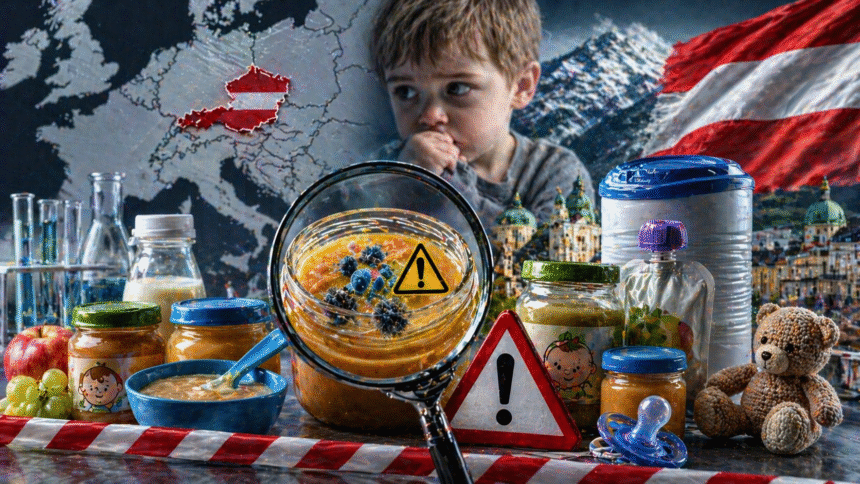
Authorities in Austria have launched an urgent investigation after toxic substances were discovered in a range of children’s food products, triggering widespread public concern and raising serious questions about food safety standards.
Initial reports indicate that the contamination was identified during routine safety inspections, with traces of harmful substances detected in products specifically marketed for children. Officials have not yet disclosed the full scope of the contamination but confirmed that affected items were distributed across multiple regions.
Health agencies warned that children—being more vulnerable to toxic exposure—could face higher risks, prompting swift precautionary measures.
In response, authorities have issued recalls for the suspected products and urged parents to avoid consuming them until further notice. Retailers have been instructed to remove the items from shelves, while public health campaigns are underway to inform consumers about the potential risks.
Government officials emphasized that rapid action is being taken to contain the situation and prevent further exposure.
Regulatory bodies are now working to identify the origin of the contamination. Early investigations are focusing on manufacturing processes, supply chains, and raw material sourcing. Officials have not ruled out the possibility of production errors, contamination during transport, or lapses in quality control.
Laboratory testing is ongoing to determine the exact nature and concentration of the toxic substances involved.
The incident is likely to increase scrutiny on food producers and regulatory frameworks within Austria and potentially across the European Union. Experts are calling for stricter quality assurance protocols and enhanced monitoring systems to prevent similar cases in the future.
Consumer trust—particularly in products designed for children—could also be affected, placing additional pressure on manufacturers to demonstrate transparency and accountability.
While the situation is currently centered in Austria, the interconnected nature of European supply chains means that concerns could extend beyond national borders if affected products were exported.
As investigations continue, the case highlights the critical importance of food safety in protecting public health. Authorities face the dual challenge of managing the immediate risk while ensuring long-term confidence in the food system.
For now, vigilance remains key as parents, regulators, and industry stakeholders await further updates on the scope and severity of the contamination.