

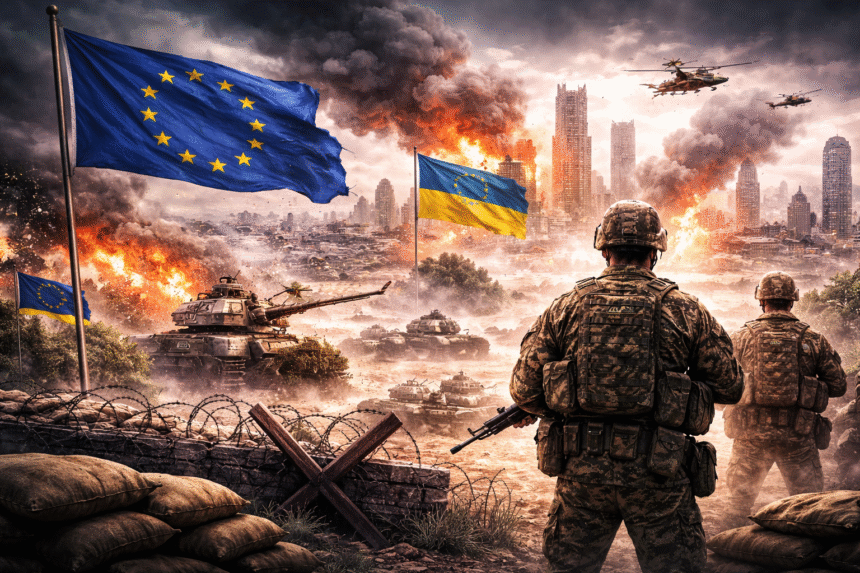
The ongoing war in Ukraine remains one of the most significant security challenges facing Europe, with growing fears that the conflict could expand beyond its current borders. As fighting continues, European leaders are increasingly focused on containing risks while preparing for a range of potential escalation scenarios.
A Conflict with Continental Implications
Since the outbreak of war, Ukraine has become a central front in Europe’s security landscape. The conflict has reshaped military priorities across the continent, forcing governments to reassess defense strategies and increase military readiness.
Officials warn that the situation remains highly volatile, with the potential for miscalculation or unintended escalation posing serious risks to regional stability.
Fears of Wider Escalation
One of the primary concerns among European policymakers is the possibility that the conflict could spread. Key risks include:
- Spillover into neighboring countries
- Increased involvement of external powers
- Escalation in the use of advanced weaponry
While there is no immediate indication of direct expansion, the presence of multiple actors and heightened tensions continue to raise alarms.
Strengthening Defense and Deterrence
In response, European countries have accelerated efforts to strengthen their defense capabilities. These measures include:
- Increased military spending across NATO members
- Deployment of additional forces to Eastern Europe
- Enhanced coordination and intelligence sharing
The goal is to reinforce deterrence and ensure that Europe is prepared to respond to any escalation.
Economic and Humanitarian Impact
Beyond security concerns, the war continues to have far-reaching economic and humanitarian consequences. Energy markets remain sensitive to developments on the ground, while millions of displaced people continue to rely on support from European countries.
The prolonged nature of the conflict has also placed sustained pressure on government budgets and public resources.
Political Unity Under Pressure
While Europe has largely maintained a unified stance in supporting Ukraine, differences in approach are beginning to emerge. Some countries advocate for continued military support, while others emphasize the need for diplomatic solutions.
These divisions, though not yet critical, highlight the challenge of maintaining long-term unity in the face of an extended conflict.
Looking Ahead
As the war enters a prolonged phase, uncertainty remains the defining feature of the situation. European leaders are closely monitoring developments, aware that the trajectory of the conflict will have lasting implications for the continent’s security architecture.
Conclusion
The war in Ukraine continues to cast a long shadow over Europe’s security environment. With fears of escalation still present, the continent faces a delicate balance between supporting Ukraine, deterring further aggression, and preventing the conflict from expanding.
In an increasingly unstable geopolitical landscape, Europe’s response to this crisis will shape its security and strategic direction for years to come.