

By using this site, you agree to the Privacy Policy and Terms of Use.
Accept
Euro Post.Euro Post.
Notification Show More
Aa
  • My Europe
    • Europe News
    • Social Issues
    • Immigration
    • EU Policies
    • EU Updates
  • World
    • Africa
    • Global Conflicts
    • Human Rights
    • Middle East
    • Latin America
    • Ukraine Crisis:
  • Business
    BusinessShow More
    Lamborghini Unleashes the Temerario: A Hybrid Supercar Poised to Surpass the Huracán
    July 26, 2025
    Is Waze Nearing the End of the Road? Google Maps Growth Raises Questions About the Future of the Navigation App
    July 26, 2025
    Germany Secures Fourth Conviction in €195 Million EU-Wide VAT Fraud Case Tied to Covid Mask Scam
    July 25, 2025
    AstraZeneca Commits $50 Billion Investment in U.S. Amid Tariff Pressures
    July 23, 2025
    ASML Shares Fall as Trump-Era Tariff Fears Cloud 2026 Growth Outlook
    July 17, 2025
  • Sport
  • Travel
  • Culture
    • Art/Design
    • Literature
    • Music
    • Film – TV
    • Fashion
Reading: Europe Has Become the Largest Importer of Weapons in the World to Confront Russia
Share
Aa
Euro Post.Euro Post.
  • My Europe
  • World
  • Business
  • Sport
  • Travel
  • Culture
Search
  • My Europe
    • Europe News
    • Social Issues
    • Immigration
    • EU Policies
    • EU Updates
  • World
    • Africa
    • Global Conflicts
    • Human Rights
    • Middle East
    • Latin America
    • Ukraine Crisis:
  • Business
  • Sport
  • Travel
  • Culture
    • Art/Design
    • Literature
    • Music
    • Film – TV
    • Fashion
Follow US
  • Advertise
© 2021 Euro Post Agency.com. All Rights Reserved.
Euro Post. > Blog > My Europe > Europe News > Europe Has Become the Largest Importer of Weapons in the World to Confront Russia
Europe News

Europe Has Become the Largest Importer of Weapons in the World to Confront Russia

World News
By World News Published March 23, 2026
Share

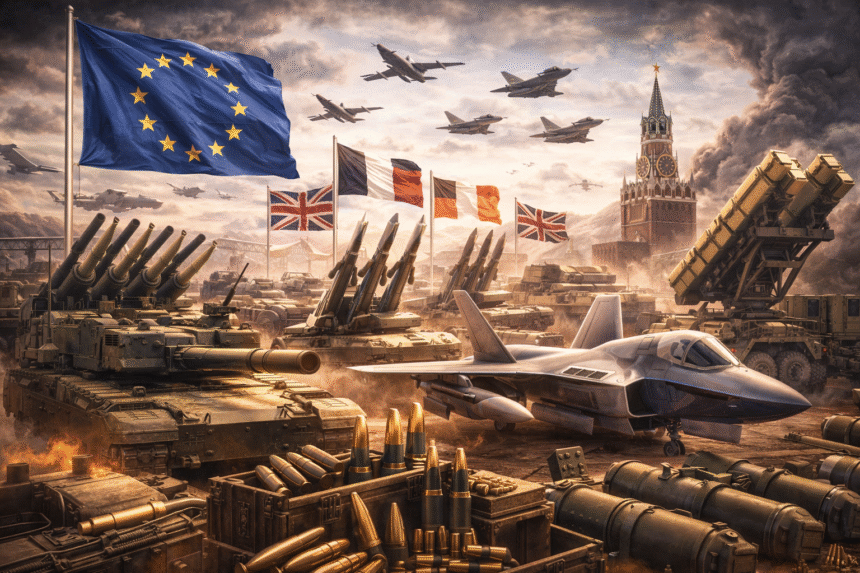
Europe has emerged as the world’s largest importer of weapons, marking a dramatic in its defense posture. Driven largely by the ongoing threat from Russia and the war in Ukraine, European nations are rapidly expanding and modernizing their military capabilities. This shift reflects a broader transformation—from decades of relative military restraint to a renewed focus on deterrence, readiness, and collective security.

Contents
A Historic Surge in Defense SpendingRussia as the Primary DriverDependence on External SuppliersNATO’s Expanding RoleEconomic and Political ImplicationsToward Strategic Autonomy or Continued Dependence?Conclusion

A Historic Surge in Defense Spending

In recent years, European countries have significantly increased defense budgets, reversing long-standing trends of reduced military expenditure. Governments across the continent are investing heavily in advanced weapons systems, including air defense platforms, fighter jets, missile systems, and armored vehicles.

This surge is fueled by a shared realization: Europe can no longer rely solely on diplomatic mechanisms or external security guarantees. The need for credible military strength has become central to national and regional strategies.

Russia as the Primary Driver

The resurgence of military spending is closely tied to Russia’s actions in Ukraine and its broader posture toward Europe. Many European nations—particularly those in Eastern and Northern Europe—view Russia as a direct and immediate threat.

Countries bordering Russia or within its strategic reach have taken the lead, accelerating arms purchases to strengthen:

  • Border defense systems
  • Air and missile defense capabilities
  • Rapid deployment forces

For these nations, military investment is not optional—it is a necessity for survival and sovereignty.

Dependence on External Suppliers

A significant portion of Europe’s weapons imports comes from outside the continent, particularly from the United States. American defense companies have become key suppliers of advanced military technology, including next-generation aircraft and integrated defense systems.

While this strengthens NATO interoperability, it also raises concerns about strategic dependence. Some European leaders argue that the continent must develop its own defense industrial base to ensure long-term autonomy.

NATO’s Expanding Role

The North Atlantic Treaty Organization (NATO) has played a central role in coordinating Europe’s military buildup. Increased defense spending aligns with NATO targets, and joint procurement initiatives are becoming more common.

Military exercises, troop deployments, and infrastructure upgrades across Europe reflect a renewed commitment to collective defense. The alliance is adapting to what many describe as a new era of great-power competition.

Economic and Political Implications

The rapid increase in arms imports carries significant economic and political consequences. On one hand, it stimulates defense industries and creates jobs. On the other, it diverts resources from social programs and raises questions about long-term sustainability.

Politically, the militarization of Europe is reshaping public debate. While many citizens support stronger defense, others express concern about escalating tensions and the risk of a prolonged arms race.

Toward Strategic Autonomy or Continued Dependence?

A key question facing Europe is whether this surge in arms imports will lead to greater independence or deeper reliance on external partners. Efforts are underway to strengthen Europe’s own defense production capabilities, but progress remains uneven.

Balancing transatlantic cooperation with strategic autonomy will be a defining challenge in the years ahead.

Conclusion

Europe’s rise as the world’s largest importer of weapons underscores a fundamental shift in its security landscape. Faced with the realities of war and geopolitical rivalry, the continent is rearming at an unprecedented pace.

While this transformation aims to enhance security and deterrence, it also introduces new risks and dilemmas. As Europe navigates this new era, the balance between will shape its future on the global stage.


You Might Also Like

The European Union Is Considering Reducing the Ability of Countries to Block Economic Merger Deals

Gas Prices Have Risen by About 65% Over a Week Due to the War and Tensions in the Strait of Hormuz

European Countries Have Strengthened Their Military Presence in the Middle East and Opened Their Bases to Support Defensive Operations

Some Countries, Like Germany, Tend to Support Washington Cautiously, While Spain and Other Countries Reject Military Escalation

Europe Is Experiencing a Political Divide Over How to Deal With the War Between the United States and Iran

World News March 23, 2026 March 23, 2026
Share This Article
Facebook Twitter Whatsapp Whatsapp Email Print
What do you think?
Love0
Sad0
Angry0
Dead0
Previous Article Gas Prices Have Risen by About 65% Over a Week Due to the War and Tensions in the Strait of Hormuz
Next Article The European Union Is Considering Reducing the Ability of Countries to Block Economic Merger Deals

Stay Connected

16k Like
85k Follow
45.6k Subscribe
Telegram Follow
- Advertisement -

Latest News

The European Union Is Considering Reducing the Ability of Countries to Block Economic Merger Deals
Europe News
Gas Prices Have Risen by About 65% Over a Week Due to the War and Tensions in the Strait of Hormuz
Europe News
European Countries Have Strengthened Their Military Presence in the Middle East and Opened Their Bases to Support Defensive Operations
Europe News
Some Countries, Like Germany, Tend to Support Washington Cautiously, While Spain and Other Countries Reject Military Escalation
Europe News
Loading

Stay Informed,Europ’s Vioce Unfolded

Sign Up for Our Newsletter

Subscribe to our newsletter to get our newest articles instantly!

Loading
© 2022 Euro Post Agency. All Rights Reserved.