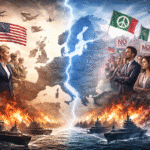


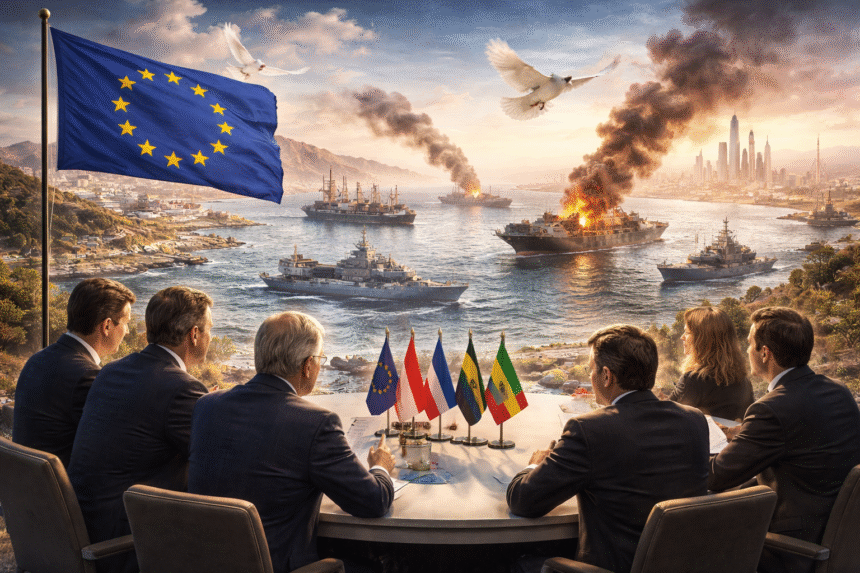
European Union leaders have firmly rejected calls for military escalation in the Gulf, emphasizing diplomacy as the primary path to de-escalation amid rising regional tensions. In a coordinated stance, EU officials called for the immediate reopening of the Strait of Hormuz and an end to attacks targeting critical infrastructure, warning that continued instability could have far-reaching global consequences.
The Strait of Hormuz remains one of the world’s most vital maritime chokepoints, responsible for a significant share of global oil shipments. European leaders stressed that any disruption to this route threatens not only energy markets but also the stability of global trade and economic recovery efforts.
Rather than endorsing military intervention, the EU is prioritizing dialogue, mediation, and multilateral engagement. Diplomatic channels are being actively pursued with regional and international stakeholders to prevent further escalation and encourage restraint among all parties involved.
Officials also expressed deep concern over recent attacks on infrastructure, including energy facilities and water systems, highlighting the humanitarian and economic risks associated with such actions. They warned that targeting civilian infrastructure could intensify crises on the ground and complicate efforts to restore stability.
The EU’s approach reflects broader strategic concerns about avoiding entanglement in another prolonged conflict while safeguarding its economic interests. With energy prices already volatile, European policymakers are seeking to prevent additional shocks that could exacerbate inflation and strain domestic economies.
Despite internal differences on foreign policy tactics, EU member states have largely aligned on the need to reduce tensions and maintain stability in the Gulf. Analysts note that Europe’s preference for diplomacy underscores its role as a balancing actor in global affairs, aiming to contain conflicts rather than escalate them.
As tensions persist, the European Union continues to advocate for restraint, cooperation, and a return to dialogue—signaling that, for Europe, the cost of escalation far outweighs any potential gains from military action.