

By using this site, you agree to the Privacy Policy and Terms of Use.
Accept
Euro Post.Euro Post.
Notification Show More
Aa
  • My Europe
    • Europe News
    • Social Issues
    • Immigration
    • EU Policies
    • EU Updates
  • World
    • Africa
    • Global Conflicts
    • Human Rights
    • Middle East
    • Latin America
    • Ukraine Crisis:
  • Business
    BusinessShow More
    Lamborghini Unleashes the Temerario: A Hybrid Supercar Poised to Surpass the Huracán
    July 26, 2025
    Is Waze Nearing the End of the Road? Google Maps Growth Raises Questions About the Future of the Navigation App
    July 26, 2025
    Germany Secures Fourth Conviction in €195 Million EU-Wide VAT Fraud Case Tied to Covid Mask Scam
    July 25, 2025
    AstraZeneca Commits $50 Billion Investment in U.S. Amid Tariff Pressures
    July 23, 2025
    ASML Shares Fall as Trump-Era Tariff Fears Cloud 2026 Growth Outlook
    July 17, 2025
  • Sport
  • Travel
  • Culture
    • Art/Design
    • Literature
    • Music
    • Film – TV
    • Fashion
Reading: Iran Crisis Could Drive Greater European Integration, ECB Says
Share
Aa
Euro Post.Euro Post.
  • My Europe
  • World
  • Business
  • Sport
  • Travel
  • Culture
Search
  • My Europe
    • Europe News
    • Social Issues
    • Immigration
    • EU Policies
    • EU Updates
  • World
    • Africa
    • Global Conflicts
    • Human Rights
    • Middle East
    • Latin America
    • Ukraine Crisis:
  • Business
  • Sport
  • Travel
  • Culture
    • Art/Design
    • Literature
    • Music
    • Film – TV
    • Fashion
Follow US
  • Advertise
© 2021 Euro Post Agency.com. All Rights Reserved.
Euro Post. > Blog > My Europe > Europe News > Iran Crisis Could Drive Greater European Integration, ECB Says
Europe News

Iran Crisis Could Drive Greater European Integration, ECB Says

World News
By World News Published March 21, 2026
Share

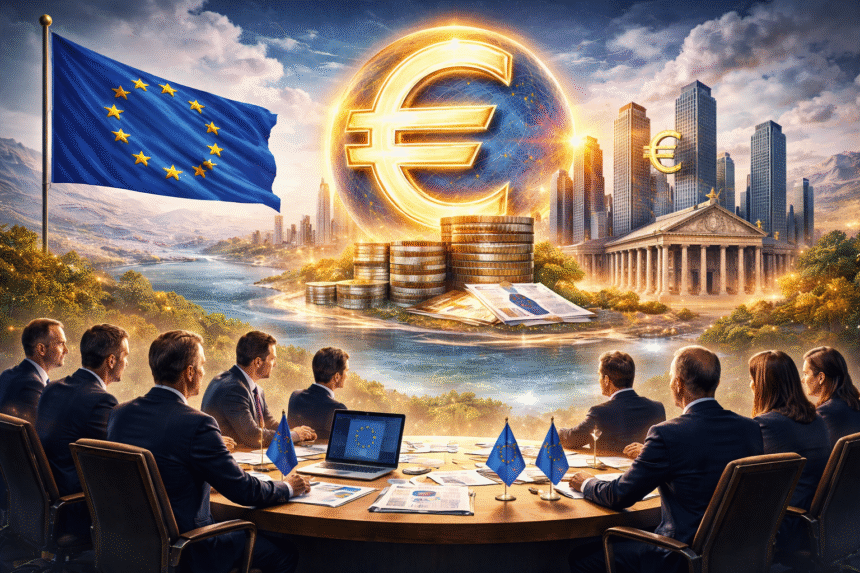
The ongoing crisis involving Iran is increasingly being viewed by European policymakers as a potential turning point for deeper integration within the European Union. Officials at the European Central Bank (ECB) argue that the current geopolitical shock has exposed structural weaknesses in Europe’s economic framework—while also creating an opportunity to strengthen unity across the bloc.

Yannis Stournaras, a member of the ECB’s Governing Council, has emphasized that the crisis should act as a “wake-up call” for European leaders. He highlighted that repeated global shocks—from the Ukraine war to the current Middle East tensions—have demonstrated the urgent need for stronger coordination in fiscal and financial policy across the EU.

At the heart of the discussion is the idea of deeper economic integration, including the possibility of issuing joint European debt to fund strategic priorities. These could include defense, energy security, and large-scale infrastructure projects—areas where fragmented national approaches have proven less effective.

The crisis has also intensified calls to accelerate long-delayed reforms, such as completing a banking union and creating a fully integrated capital markets system. These initiatives aim to improve financial resilience, facilitate investment flows, and reduce the EU’s vulnerability to external shocks.

Rising energy prices, driven by instability in the Middle East, have added further urgency. Europe’s heavy dependence on imported energy has once again exposed the limits of national-level responses, reinforcing the argument for collective action. Policymakers warn that without closer coordination, the bloc risks facing recurring economic disruptions with limited tools to respond effectively.

However, achieving deeper integration remains politically complex. Past efforts have often stalled due to disagreements among member states over sovereignty, fiscal responsibility, and risk-sharing. Some countries remain cautious about joint borrowing or centralized financial mechanisms, fearing long-term liabilities.

Despite these challenges, the current crisis is shifting perspectives. Analysts note that periods of instability have historically driven European integration forward, as governments recognize the need for collective solutions to shared problems.

As the Iran crisis continues to impact global markets and European economies, the debate is gaining momentum. For the ECB and many policymakers, the message is clear: deeper integration is no longer just an option—it may be a necessity for Europe’s long-term stability and resilience.

You Might Also Like

Europe Rejects Military Escalation in the Gulf, Urges Diplomatic Solutions

Landmark EU–Mercosur Deal Creates One of the World’s Largest Free Trade Areas

Pressure Mounts on Keir Starmer to Soften His Stance on Europe

Energy Crisis Pushes Europe to Rethink Nuclear Power as Strategic Option

NATO Redeploys Forces to Europe Amid Rising Middle East Tensions

World News March 21, 2026 March 21, 2026
Share This Article
Facebook Twitter Whatsapp Whatsapp Email Print
What do you think?
Love0
Sad0
Angry0
Dead0
Previous Article Energy Crisis Pushes Europe to Rethink Nuclear Power as Strategic Option
Next Article Pressure Mounts on Keir Starmer to Soften His Stance on Europe

Stay Connected

16k Like
85k Follow
45.6k Subscribe
Telegram Follow
- Advertisement -

Latest News

Europe Rejects Military Escalation in the Gulf, Urges Diplomatic Solutions
Europe News
Landmark EU–Mercosur Deal Creates One of the World’s Largest Free Trade Areas
Europe News
Pressure Mounts on Keir Starmer to Soften His Stance on Europe
Europe News
Energy Crisis Pushes Europe to Rethink Nuclear Power as Strategic Option
Europe News
Loading

Stay Informed,Europ’s Vioce Unfolded

Sign Up for Our Newsletter

Subscribe to our newsletter to get our newest articles instantly!

Loading
© 2022 Euro Post Agency. All Rights Reserved.