

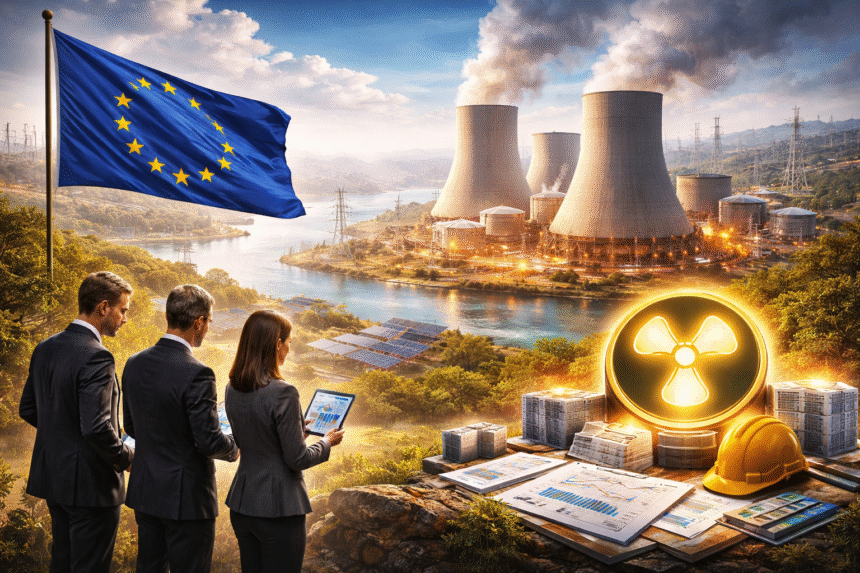
Europe’s deepening energy crisis is reigniting a long-standing debate over the role of nuclear power, as governments across the continent reconsider it as a key pillar of their future energy strategy. Surging energy prices, coupled with ongoing geopolitical tensions and supply disruptions, have exposed vulnerabilities in Europe’s energy system—prompting a renewed focus on stable, domestically controlled sources of power.
For years, nuclear energy has divided European policymakers. Countries like Germany moved to phase out nuclear plants in favor of renewable energy, while others, such as France, have long relied on nuclear power as a cornerstone of their energy mix. Today, however, the shifting global landscape is forcing a reassessment of those positions.
With gas supplies uncertain and renewable energy still facing intermittency challenges, nuclear power is increasingly viewed as a reliable, low-carbon alternative capable of ensuring energy security. Advocates argue that nuclear energy offers a consistent baseload supply, reducing dependence on external energy sources while supporting climate goals.
Several European countries are now exploring plans to extend the lifespan of existing reactors, invest in next-generation technologies such as small modular reactors (SMRs), or even reverse previous phase-out decisions. These moves reflect a growing recognition that energy security and economic stability may require a more diversified approach.
However, the renewed interest in nuclear power is not without controversy. Critics continue to raise concerns about safety risks, radioactive waste management, and the high costs associated with building and maintaining nuclear infrastructure. Public opinion also remains divided, particularly in countries with strong anti-nuclear movements.
Despite these challenges, the urgency of the current crisis is shifting the conversation. Policymakers are increasingly framing nuclear energy not as a replacement for renewables, but as a complementary component in a broader energy mix designed to balance sustainability, affordability, and reliability.
As Europe navigates this complex transition, the debate over nuclear power is likely to intensify. What was once seen as a fading energy source is now returning to the center of strategic discussions—highlighting how quickly priorities can shift in the face of global uncertainty and economic pressure.