


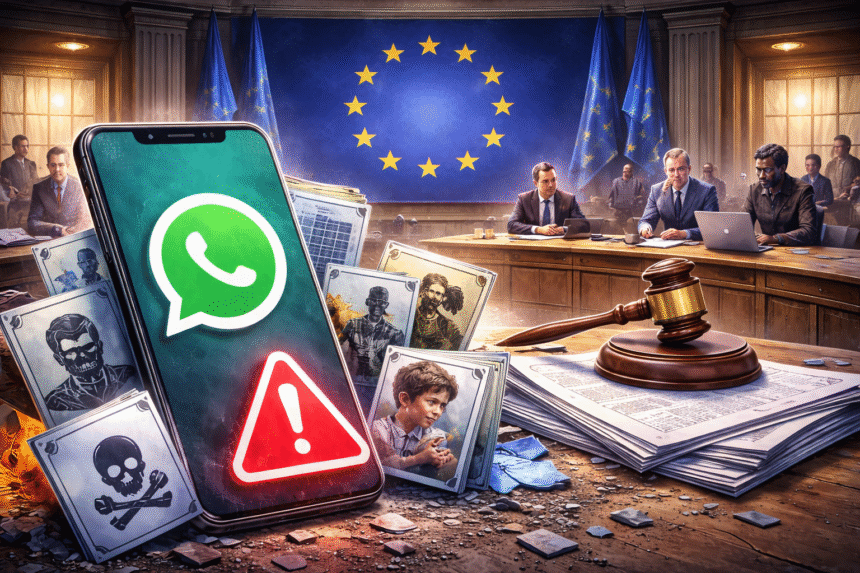
The European Union has taken new steps to increase pressure on WhatsApp to strengthen its handling of illegal content, signaling a tougher regulatory stance toward major messaging platforms operating within the bloc.
EU officials stated that WhatsApp, owned by Meta, must take greater responsibility in preventing the spread of illegal material, including hate speech, terrorism-related content, child exploitation material, and organized criminal activity. The move comes as part of the EU’s broader efforts to enforce its digital regulations more rigorously across online platforms.
Stronger Oversight Under EU Digital Rules
The action is closely linked to the Digital Services Act (DSA), which requires large online platforms to proactively assess and mitigate risks linked to illegal and harmful content. Under these rules, platforms are expected to:
- Respond more quickly to removal orders from authorities
- Improve transparency around content moderation
- Strengthen cooperation with national regulators
- Implement safeguards to prevent the misuse of their services
EU regulators argue that private messaging services, despite end-to-end encryption, cannot remain outside accountability frameworks when their platforms are used to facilitate serious crimes.
Balancing Security and Privacy
WhatsApp has long defended its use of end-to-end encryption, claiming it is essential for protecting user privacy and free expression. EU officials acknowledged the importance of privacy but stressed that encryption cannot be used as a shield to avoid responsibility, particularly when platforms are aware of systemic misuse.
The debate highlights a growing tension in Europe between safeguarding digital privacy and ensuring public safety in an era of encrypted communications.
Possible Consequences for Non-Compliance
If WhatsApp fails to meet EU requirements, it could face substantial fines, increased monitoring, or additional corrective measures under EU law. Regulators have emphasized that enforcement actions are not symbolic and that penalties will be applied consistently across all major tech companies.
A Broader Signal to Tech Giants
The move against WhatsApp is widely seen as part of a broader EU strategy to rein in the power of large technology firms and ensure they operate under stricter legal and ethical standards. Brussels aims to set a global precedent, positioning Europe as a leader in digital governance.
As enforcement intensifies, WhatsApp—and other major platforms—are expected to reassess how they balance user privacy,