


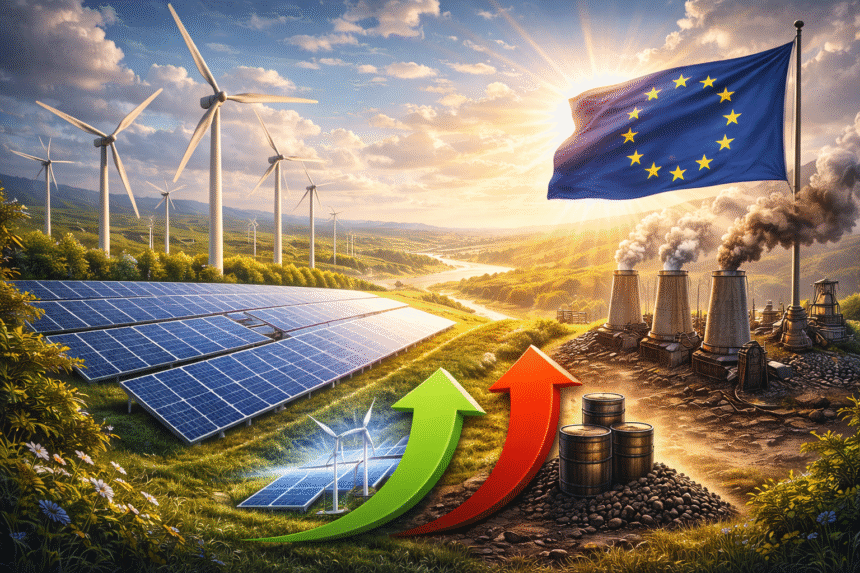
Renewable energy sources, led by wind and solar power, have for the first time generated more electricity than fossil fuels across the European Union, marking a historic milestone in the bloc’s energy transition and climate policy agenda.
According to recent energy data and analysis, the shift reflects years of sustained investment in renewable infrastructure, tighter climate regulations, and a strategic push to reduce dependence on imported fossil fuels. Wind and solar generation surged across multiple member states, while coal and gas output continued to decline.
A Turning Point for Europe’s Energy Mix
The milestone represents a structural change rather than a temporary fluctuation, analysts say. Expansion of offshore and onshore wind farms, rapid growth in solar installations, and improvements in grid integration have collectively reshaped Europe’s power sector.
Several EU countries, including Germany, Spain, the Netherlands, and Denmark, recorded record-high renewable output, driven by favorable weather conditions and expanded capacity. At the same time, coal-fired power generation fell sharply, and gas use declined amid high prices and long-term decarbonization targets.
Climate Policy Paying Off
European officials view the development as evidence that the EU’s climate policies are delivering tangible results. Measures such as carbon pricing under the Emissions Trading System, stricter emissions standards, and large-scale green investment programs have accelerated the shift away from fossil fuels.
The move also aligns with the EU’s goal of achieving climate neutrality by 2050 and cutting greenhouse gas emissions by at least 55 percent by 2030 compared to 1990 levels.
Energy Security and Economic Impact
Beyond climate considerations, the transition has strengthened Europe’s energy security. Reduced reliance on fossil fuel imports—particularly gas—has helped cushion the bloc from geopolitical shocks and price volatility, especially following disruptions linked to the war in Ukraine.
Lower wholesale electricity prices during periods of high renewable output have also provided relief to consumers and industries, though officials acknowledge challenges related to grid stability, storage, and backup capacity.
Challenges Ahead
Despite the milestone, experts warn that further investment is needed to modernize power grids, expand energy storage, and ensure consistent supply during periods of low wind or sunlight. Faster permitting processes and cross-border energy coordination remain key priorities.
Still, the shift marks a defining moment for Europe’s energy future. As renewable power continues to expand, policymakers and analysts increasingly view fossil fuels not as a foundation of the system, but as a declining supplement in a rapidly decarbonizing economy.