

Tensions between the United States, Russia and European allies have sharply intensified in the Arctic and North Atlantic after U.S. forces seized a Russian-flagged oil tanker in waters monitored by the Icelandic Coast Guard, raising fresh concerns about sovereignty, sanctions enforcement and the role of great powers in the increasingly strategic Arctic region.
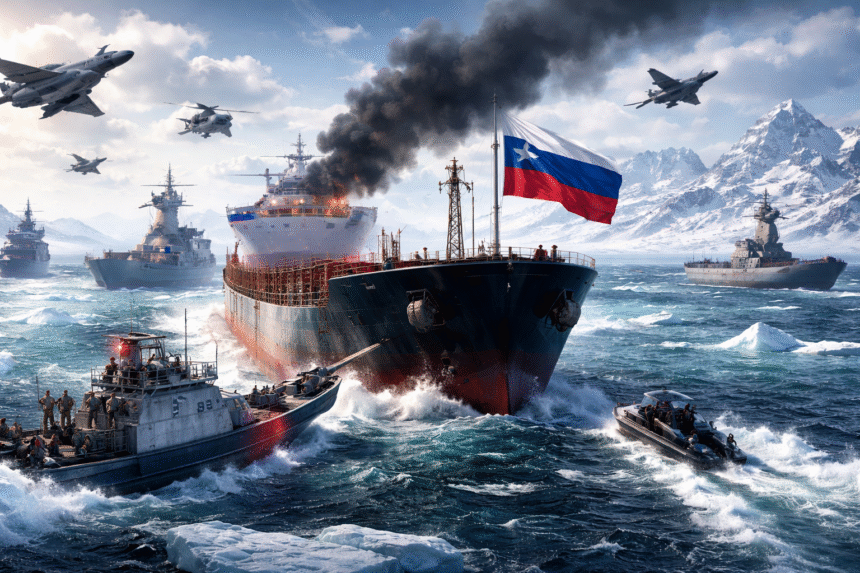
The vessel, formerly known as Bella 1 and recently renamed Marinera, was intercepted and taken into custody by the U.S. Coast Guard in the North Atlantic following a prolonged pursuit that lasted several weeks and crossed from the Caribbean toward European waters. Washington says the ship was targeted under a U.S. federal court warrant for allegedly violating multiple sanctions by engaging in smuggling operations linked to Venezuelan and Iranian oil networks often referred to as the “shadow fleet.”
Operation and International Reactions
The interception represents one of the most assertive moves yet by the United States to enforce sanctions against vessels it claims are involved in illicit energy trade tied to geopolitical adversaries. U.S. officials said the operation was carried out with support from the Department of Homeland Security, the Justice Department and military assets, including surveillance aircraft and Coast Guard cutters. The United Kingdom’s Ministry of Defence confirmed that British forces provided pre-planned operational support—including surveillance flights and logistical basing—to assist the U.S. mission.
Russia has strongly condemned the seizure, with the Transport Ministry asserting that no nation has the right to use force against a foreign-registered vessel and describing the action as a violation of international maritime law, specifically the 1982 United Nations Convention on the Law of the Sea. Moscow also highlighted that its own naval assets—including a submarine—had been dispatched to shadow the tanker prior to the arrest.
Arctic and Greenland Context
This confrontation comes amid heightened speculation over U.S. strategic interests in the Arctic, particularly Greenland—a semi-autonomous territory of the Kingdom of Denmark. President Donald Trump has revived discussion of acquiring Greenland, even suggesting that military options remain “on the table,” a stance that has alarmed NATO partners and reignited debates over sovereignty and alliance cohesion.
Analysts say that the Arctic is rapidly becoming a geopolitical pressure point as melting ice opens new shipping routes and access to mineral and energy resources. While legal frameworks like the Ilulissat Declaration exist to manage cooperation among Arctic coastal states, aggressive enforcement actions far from territorial waters are increasing strains between major powers.
Diplomatic Strains and Future Risks
The U.S. tanker seizure has triggered a cascade of diplomatic pushback: Denmark and Greenland have sought talks with U.S. officials to reaffirm respect for autonomy and territorial rights, and European capitals are urging calm while recalibrating their own Arctic policies. Critics warn that any perception of overreach—whether in naval interdictions or Arctic sovereignty claims—could undermine NATO solidarity and complicate global efforts to secure peace in other theatres, including ongoing negotiations over the Ukraine conflict.
The Kremlin meanwhile has formally requested that Washington halt the pursuit of Russian-affiliated tankers, a diplomatic appeal that underscores the broader contest over energy routes, sanctions regimes and influence in international waters.
As the situation develops, capitals in Europe and beyond will be watching closely for signs that this maritime dispute could spill into wider geopolitical confrontation—particularly if enforcement actions expand or if Arctic governance frameworks are tested by powerful states asserting competing strategic priorities.