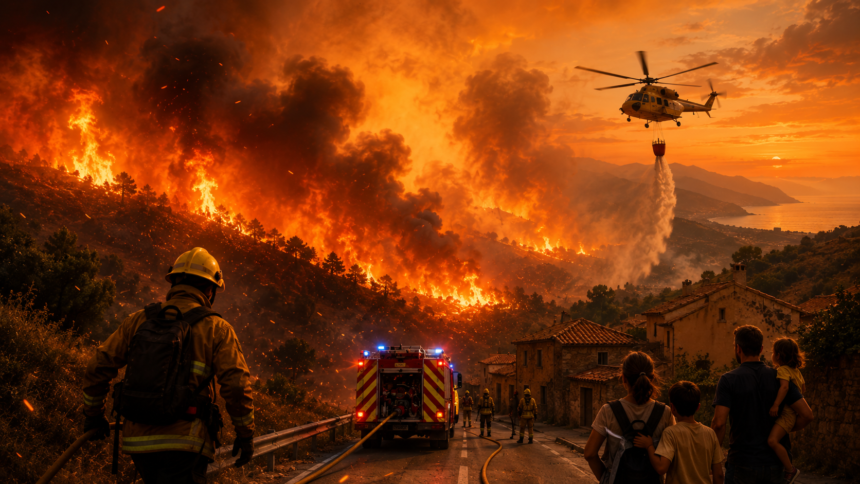
Southern Europe is facing another wave of destructive wildfires as extreme heat, dry vegetation and strong winds fuel new blazes, with hundreds of people evacuated from their homes in Spain while firefighters struggle to contain several major fires.
One of the most serious fires is burning in southwestern Spain near the medieval town of Niebla in Huelva province. The blaze has expanded to nearly 20,000 hectares, with difficult terrain, high temperatures and strong winds complicating firefighting operations. Around 500 residents have been evacuated, while authorities are considering additional precautionary evacuations as conditions remain unstable.
Firefighters are also dealing with separate emergencies elsewhere in the country. In Segovia, a wildfire that reportedly began after a vehicle caught fire on a motorway forced 176 residents to leave their homes. Although higher humidity has helped crews make progress, authorities continue to monitor the area because of difficult terrain and the risk of the flames spreading again.
Another major blaze near Tírig in the eastern province of Castellón burned roughly 800 hectares and prompted the evacuation of around 900 people. Improved overnight weather conditions helped firefighters bring the fire closer to stabilization, but emergency teams remain deployed across the affected area.
The latest outbreaks are part of a particularly severe wildfire season in Spain. Reuters reported that more than 244,000 hectares had already burned across the country this year, with consecutive heatwaves leaving forests and vegetation exceptionally dry and vulnerable to rapidly spreading fires.
The emergency extends beyond Spain. Greece and France have also battled major wildfires in recent weeks, placing emergency services across Southern Europe under sustained pressure. Fires have forced evacuations and mobilized large numbers of firefighters and aircraft across the region.
Scientists have repeatedly warned that human-driven climate change is intensifying the heat and drought conditions that allow wildfires to spread faster, burn for longer periods and become more destructive. Europe is warming particularly rapidly, increasing concerns that severe wildfire seasons could become increasingly common.
With temperatures remaining high and vegetation extremely dry, authorities are warning residents in vulnerable areas to follow evacuation orders and emergency instructions as firefighters continue efforts to prevent new outbreaks from developing into larger disasters.