


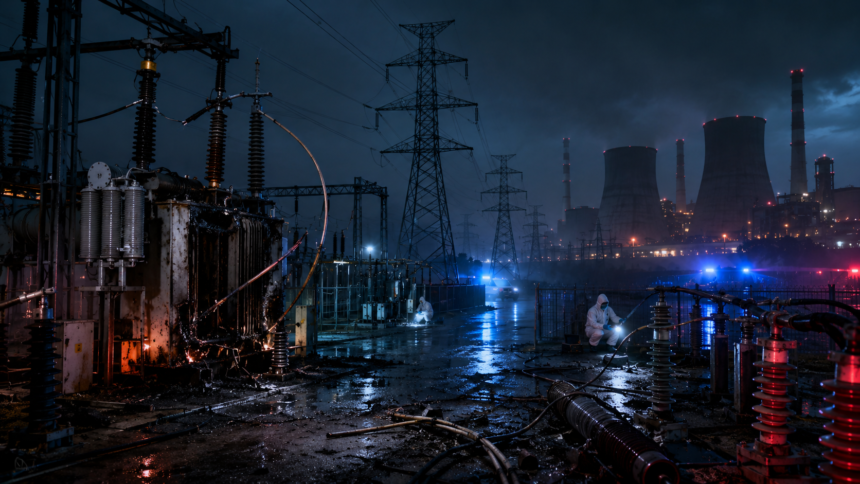
German authorities are investigating two suspected acts of sabotage against the country’s electricity infrastructure within 24 hours, intensifying concerns about the security of critical facilities and the growing threat of hybrid warfare in Europe.
One of the incidents targeted an electricity substation near Bergheim in North Rhine-Westphalia. The damage temporarily disconnected several lignite-fired power plants operated by the energy company RWE, with a combined generating capacity of approximately 4,200 megawatts.
Despite the scale of the disruption, Germany’s electricity network remained stable, and officials said the affected plants were gradually reconnected. The authorities have not reported widespread power cuts resulting from the incident.
Police and security agencies are working to determine how the substation was damaged and whether the action was politically motivated. Investigators have not publicly identified any suspects or established responsibility for the attack.
A separate incident was reported in Brandenburg, where devices were allegedly used to damage high-voltage electricity lines. The discovery prompted another investigation into suspected deliberate interference with the power network.
German officials have not confirmed that the two incidents were connected. Nevertheless, their occurrence within a short period has raised fears that energy infrastructure could be increasingly vulnerable to coordinated sabotage, domestic extremism or operations directed by foreign actors.
The investigations come as Germany and other European countries strengthen protections around electricity networks, transport hubs, telecommunications systems and military supply routes. These facilities have become central to European security concerns since the beginning of Russia’s war against Ukraine.
Germany has also accused Russia of involvement in an attempted drone attack at Leipzig/Halle Airport. The unmanned aircraft was reportedly carrying explosives and was found near a Ukrainian cargo plane. Moscow denied the accusation.
While the timing of the power-grid incidents has fuelled speculation about possible hybrid operations, investigators have cautioned against attributing responsibility without conclusive evidence. German authorities are also considering whether domestic extremist groups could have been involved.
Previous attacks against infrastructure in Germany have been linked to radical organisations. In 2024, a far-left group claimed responsibility for setting fire to an electricity pylon supplying Tesla’s factory near Berlin, temporarily disrupting production at the facility.
The latest cases have renewed debate over Germany’s preparedness to protect its critical infrastructure. Electricity substations and transmission lines cover extensive areas, and many facilities are located in remote or lightly monitored locations, making comprehensive physical protection difficult.
Government officials are expected to review surveillance, security coordination and emergency-response measures around strategically important energy facilities. Operators may also face pressure to strengthen backup systems and improve the network’s ability to withstand physical attacks.
The investigations remain ongoing, and authorities have not announced whether arrests have been made. Until the perpetrators and their motives are identified, officials are treating the incidents as suspected sabotage while examining both domestic and foreign links. Reuters