

France is facing renewed pressure on its electricity system after extreme heat, drought and an unusual jellyfish invasion disrupted more than 20% of the country’s nuclear generating capacity, highlighting the growing vulnerability of critical energy infrastructure to environmental conditions.
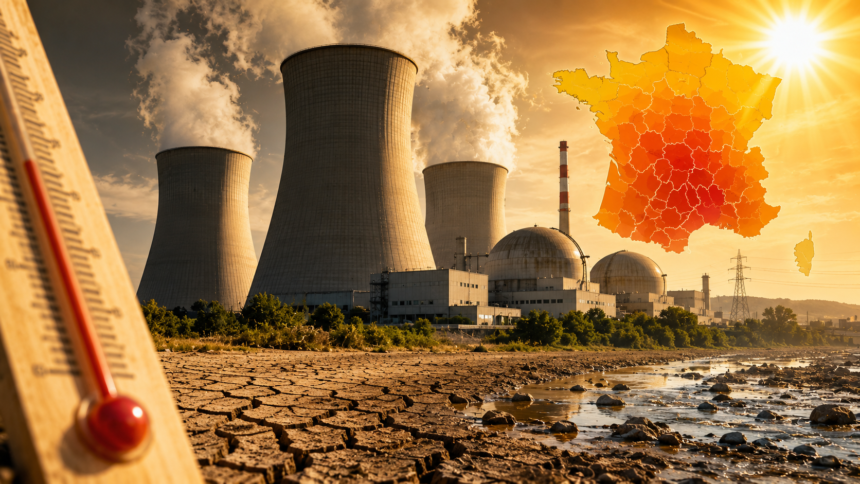
On August 12, around 20.4% of France’s nuclear generating capacity was unavailable because of environmental constraints, according to calculations based on data from state-controlled utility EDF. Thirteen of EDF’s 57 reactors were affected, with eight completely offline and another five operating at reduced output.
The disruption is particularly significant because France relies on nuclear energy for roughly 70% of its electricity generation, giving the country one of the world’s most nuclear-dependent power systems. Problems affecting reactors can therefore quickly influence electricity supply and prices not only in France but also across interconnected European power markets.
Several problems have converged at the same time. Repeated heatwaves and drought have raised the temperature and reduced the levels of rivers used to cool nuclear reactors. Environmental regulations limit how much heated cooling water plants can discharge back into rivers, forcing EDF to reduce production or temporarily shut reactors when water temperatures become too high.
The heatwave alone placed significant pressure on output. Reuters reported that environmental restrictions could reduce French nuclear production by as much as 7.3 gigawatts, while temperatures in parts of the country were expected to approach 39°C.
But the latest disruption has also come from a more unusual source.
At the Gravelines nuclear power station in northern France, a large swarm of jellyfish entered cooling-water systems connected to the North Sea, clogging pumps essential to reactor operations. Three reactors were temporarily shut down, another was restricted to around half its normal output, while a fifth unit was already undergoing maintenance. EDF said the incident posed no danger to employees, the plant or the environment.
The combination of extreme heat and reduced nuclear availability has already affected Europe’s electricity market. French day-ahead electricity prices rose by 21.8% to €142.50 per megawatt-hour, while German prices climbed 22.8% as the same weather pattern also reduced wind generation there.
The situation demonstrates how extreme weather can simultaneously affect several parts of Europe’s energy system. High temperatures can restrict nuclear production, calm conditions can reduce wind generation, and increased use of air conditioning can push electricity demand higher at precisely the moment when supply is becoming constrained.
France’s difficulties also raise a broader question for European energy policy. Nuclear power is expected to remain an important source of low-carbon electricity as Europe attempts to reduce dependence on fossil fuels and strengthen its energy security. Yet many reactors depend heavily on rivers, coastal waters and other cooling systems that can themselves be affected by rising temperatures, drought and changing marine ecosystems.
Scientists have warned that jellyfish disruptions could also become more frequent as warming seas and changes to marine ecosystems create conditions favorable to larger swarms.
For France, the immediate challenge is maintaining sufficient electricity production through the current heatwave. The longer-term challenge is more complicated: ensuring that one of Europe’s most important nuclear fleets remains resilient in an environment where extreme heat, water shortages and other climate-related disruptions are becoming increasingly difficult to treat as exceptional events.