

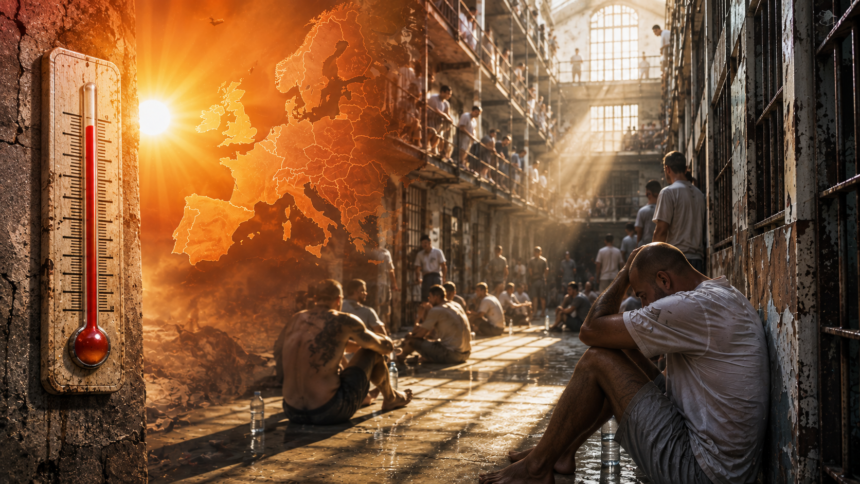
Extreme summer temperatures are intensifying an already serious prison overcrowding crisis across Europe, exposing poor ventilation, ageing infrastructure and limited access to cooling in correctional facilities as heat waves push temperatures to dangerous levels.
Many European prisons were built decades or even centuries ago and were not designed to cope with prolonged periods of extreme heat. In overcrowded cells, prisoners can spend hours in confined spaces with limited airflow, while some facilities lack adequate fans, air conditioning or other effective cooling systems.
The problem is particularly acute in countries where prison populations significantly exceed available capacity. According to the Council of Europe, overcrowding remains a persistent challenge in several European prison systems, increasing pressure on accommodation, sanitation and healthcare services.
This summer’s extreme temperatures have added another layer of concern. When outdoor temperatures exceed 40°C, poorly ventilated cells can retain heat for long periods, particularly overnight, leaving both inmates and prison staff exposed to potentially dangerous conditions.
Prison authorities have introduced measures in some facilities such as distributing additional drinking water, allowing greater access to showers, installing fans and adjusting daily routines. However, prison unions, lawyers and human-rights organisations argue that temporary measures cannot address the underlying problem of overcrowded and outdated buildings.
The heat can be especially dangerous for older prisoners and people with chronic illnesses or those taking medications that affect the body’s ability to regulate temperature. Medical staff inside prisons can also face increased workloads during prolonged heat waves.
Europe’s wider climate trend is making the issue more urgent. Scientists expect extreme heat events to become more frequent and intense, meaning prison systems designed for much cooler conditions will increasingly need permanent adaptations.
Possible solutions include renovating facilities to improve ventilation and insulation, creating shaded areas, expanding access to water and cooling systems, and reducing overcrowding through alternatives to imprisonment where legally appropriate.
The crisis illustrates how extreme weather is creating challenges far beyond energy and agriculture. For Europe’s crowded prisons, increasingly severe heat waves are turning longstanding infrastructure and capacity problems into an escalating public-health and human-rights concern.