

The European Union is considering establishing a permanent fleet of firefighting aircraft to strengthen its response to increasingly destructive forest fires across the continent.
The proposal follows an extraordinary summer marked by prolonged heatwaves, widespread drought and major wildfires that stretched national emergency services and forced thousands of people to evacuate their homes.
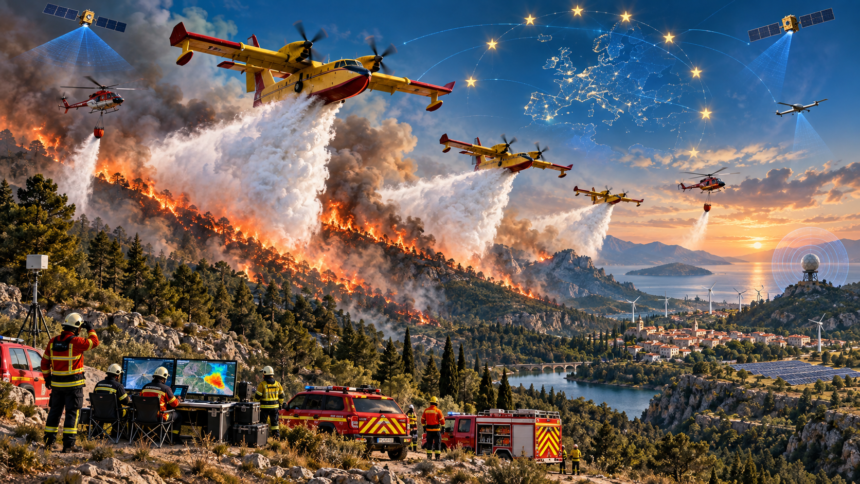
European Commission President Ursula von der Leyen said the experience demonstrated the need for stronger collective capabilities. Under the proposed plan, the EU would maintain its own dedicated fleet of water-bombing aircraft and other specialised equipment that could be rapidly deployed wherever national resources are overwhelmed.
At present, European countries can request assistance through the EU Civil Protection Mechanism. Other member states may then provide aircraft, helicopters, vehicles or emergency personnel depending on availability.
However, the system relies heavily on countries being able to spare equipment from their national fleets. During simultaneous emergencies, several governments may need the same limited resources at the same time, leaving the most severely affected regions waiting for assistance.
A permanent European fleet could reduce those delays by providing aircraft reserved specifically for cross-border emergencies. The planes could be positioned strategically in high-risk areas during the summer and moved according to weather forecasts, drought conditions and the likelihood of fires.
The initiative would be expected to build on the EU’s existing rescEU reserve, which coordinates shared emergency-response assets. Brussels could purchase or jointly finance additional water-bombing aircraft while establishing common standards for deployment, maintenance and crew training.
The plan is not limited to aerial firefighting. The Commission also wants to improve early-warning systems so that authorities can identify dangerous conditions and emerging fires before they spread beyond control.
Satellite monitoring, artificial intelligence, weather data and ground sensors could be combined to detect abnormal heat, smoke and changes in vegetation. Information could then be shared more quickly among emergency services, local authorities and neighbouring countries.
Better forecasting would also allow aircraft and crews to be deployed before a crisis reaches its peak. Officials could pre-position resources near areas experiencing extreme heat, strong winds or exceptionally dry vegetation.
European policymakers argue that climate change has altered the scale and geography of the wildfire threat. Southern European countries remain particularly exposed, but severe fires are increasingly affecting central and northern regions that historically faced lower risks and may lack sufficient specialist equipment.
Establishing a permanent fleet would require significant funding and agreement among member states over ownership, command and deployment priorities. Governments would also need to determine how the European fleet would cooperate with national fire services without duplicating their responsibilities.
Environmental experts warn that aircraft alone cannot prevent catastrophic wildfires. They say Europe must also invest in forest management, controlled burning, vegetation clearance, resilient infrastructure and public education.
The Commission is therefore expected to include the firefighting fleet within a broader climate-resilience strategy addressing heatwaves, droughts, water shortages and emergency preparedness.
If approved, the permanent fleet would represent an important expansion of Europe’s collective disaster-response capacity. Its success would depend on rapid deployment, reliable early warnings and sustained investment in prevention before fires begin.