

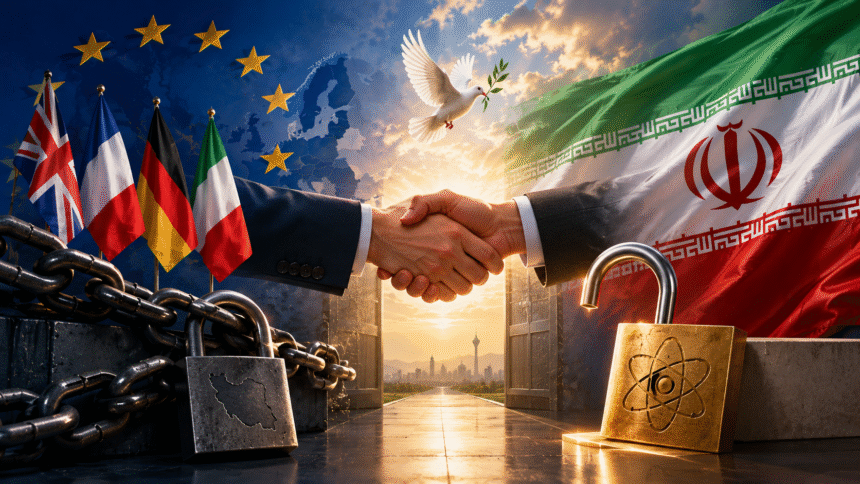
BRUSSELS — European powers have signaled a potential shift in their approach toward Iran, indicating they may consider lifting sanctions if Tehran complies with the terms of a new agreement aimed at addressing its nuclear program and supporting an end to regional hostilities.
The announcement came in a joint position by the United Kingdom, France, Germany, and Italy, which stated that sanctions relief could become part of a broader diplomatic framework if Iran takes verifiable steps to limit its nuclear activities and cooperates fully with international monitoring mechanisms. The four countries emphasized that Iran must never acquire a nuclear weapon and pledged to work closely with the United States and the International Atomic Energy Agency (IAEA) to ensure compliance.
The European stance follows the recent breakthrough agreement between Washington and Tehran, which seeks to end months of military confrontation and establish a pathway toward a comprehensive settlement. Under the draft framework, Iran would maintain commitments related to its nuclear program while discussions continue over sanctions relief, regional security, and economic cooperation.
Diplomatic sources say the proposed arrangement could include the gradual easing of restrictions on Iranian oil exports, the release of frozen Iranian assets, and broader economic measures designed to encourage long-term compliance. However, European officials have stressed that any sanctions relief would be conditional and reversible should Iran fail to meet its obligations.
The development marks a notable change in tone from European governments, which in recent years had pursued tougher measures against Tehran over its nuclear activities, regional policies, and human rights concerns. European leaders have nevertheless maintained that diplomacy remains the preferred path for preventing further escalation in the Middle East.
Financial markets reacted positively to signs of progress, with energy prices easing amid expectations that reduced tensions could help stabilize global oil supplies and secure shipping routes through the Strait of Hormuz, one of the world’s most important energy transit corridors.
Despite the optimism, significant challenges remain. Key details surrounding Iran’s uranium enrichment activities, long-term monitoring arrangements, and the timeline for sanctions relief have yet to be finalized. Political opposition inside Iran and skepticism among some Western allies could also complicate implementation of any future agreement.
As negotiations continue, European leaders are portraying the possibility of sanctions relief not as a concession, but as a diplomatic incentive intended to support regional stability, prevent nuclear proliferation, and open the door to a broader political settlement between Iran and the international community.